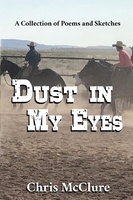
Check out my book!

Dust In My Eyes
McClure, Christopher P.

Tuesday, April 21, 2026

 True to Self

I admire people who are able to be completely true to themselves in any environment.  They are not swayed by trends or the desire to fit in, yet they adapt to the situation and simply shine as who and what they are.  They aren't trying to draw attention and don't have a "look at me" presence, they simply live to the beat of a different drummer, and they are comfortable with that.

When we are true to ourselves, we thrive.  It may not be in the ways others are comfortable with but that doesn't really matter.  There is peace in being who you are rather than always trying to fit in.

Yesterday I came across a garden variety of petunia growing wild among the weeds and grasses of a meadow.  I'm sure it is descended from a forebearer which was deliberately planted.  This one was thriving and shining and going wild by simply being what it was designed to be.


Monday, April 20, 2026

 Rising Mists

This morning as I watch the mists rising from the pond my mind twists with two forces pulling my thoughts; one is the scientific explanation that the water is warmer than the air this morning and the second is the simple, poetic beauty of rising mists.  The mists become a curtain hiding the surface where unknown dangers might lurk.

I sometimes think there is a war between reason and fantasy being fought within our minds.  Reason is based in our desire to understand and control where fantasy is rooted in our understanding that we are not in control but ride the currents of a reality that is beyond comprehension.  In the world of reason, we are limited to what we deem to be real.  The world of fantasy is unlimited -- unbounded by what we know or can imagine.  In it the unexpected is expected.

What is it that drives our tendency to fantasize?  Is it disappointment or disillusionment with reality or is it something calling us to reach beyond the circumstances that bind us to place and time?  

I think reality and fantasy are linked.  Fantasy -- imagination -- is what allows us to discover and understand the amazing and marvelous reality that surrounds us.  Our mind asks, "what if?" before it seeks new paths of understanding.  We are wired to crave knowledge and that wiring creates pathways to exploration of the unknown.

Yesterday we took a short walk simply to look at the various plants we could find growing around our property.  Our focus is on identifying those foreign to our soil and those which are native.  We identify and decide whether to remove or retain and encourage.

Growing in the ditch along our county road we encountered a small cluster of Pink Ladies (Oenothera speciosa).  They are also known as the Evening Primrose.  They are native to Texas and often seen along roadsides.  Identifying these plants is part of our quest for knowledge but it also provides fodder for the imagination.  Perhaps they are really fairies in pink skirts dancing in the wind.


Saturday, April 18, 2026

Encouragement Matters

 Everyone faces times of doubt.  It may be that we feel unprepared or perhaps unworthy.  In times like those it is always nice to receive encouragement.  Hopefully, there will be a mentor there to encourage you in those times of doubt.

Sometimes encouragement can take other forms.  Creating opportunity for others is a form of encouragement.  It may be a bit more subtle but helping to create that small space where someone can find a niche in which to fit is encouraging to their growth.  They may not always recognize your contribution, but as they thrive in that new role or activity, they will remember that you were there.

We have numerous Eastern Bluebirds (Sialia sialis) that grace our place.  Watching them flit from branch to ground in search of food is one of the enjoyable moments of the day.  They feel comfortable enough around us that they have nested and raised a brood.  Yesterday we took a quick peek to see how they were doing.  You can even see the blue tint to the feathers already.  Encouraging them to nest was simply a matter of providing the space -- both in the form of a nesting box and leaving them alone to fulfill their purpose.


Friday, April 17, 2026

 Omens and Portents

When you live in the country you are sometimes surprised by the things that show up in your yard or that you see in your rural environment.  Country dogs can be a contributing factor to those surprises.  In those times when we lived in the country and had dogs -- even those supposedly confined to a fenced area -- we have been blessed by the discoveries they have made and felt compelled to share with us.

In Nebraska we had the dried remains of a deer carcass laid upon our front porch.  Opossums have been delivered to our doorstep -- not always those whose spirits had gone to the hereafter but were playing their name out until opportunity for escape occurred.  Yesterday we were graced with a demonic looking skull and a few rib bones clinging together by thin strips of dry hide.

If we were the superstitious type, it would be very disconcerting to see the skull looking at you from in front of the house.  In our case it was more of a stimulus to our curiosity than anything else.  We have not seen any of the genus Capra in our neighborhood, but there obviously are, or at least, have been some and now there is one less.

I can imagine that some might find the discovery of the skull as an obviously evil portent of bad things to come.  I choose to look at it in light of the term in common usage today of GOAT -- Greatest of All Time!  Maybe our canine guardian was simply demonstrating his feelings toward us....


Thursday, April 16, 2026

 Adaptability

Most of us adapt in some form or another to the environment in which we live.  If you are single, you form habits and idiosyncrasies that reflect a lifestyle of filling time the way you would choose without worrying about what someone else might need or desire.  Likewise, if married or some other form of joint living arrangement, you adapt to accommodate the needs of others.

The same occurs in the work environment.  Company culture is important and over time employees find ways to fit into that culture or they leave.

We are adaptable creatures.

Adaptability is crucial in nature.  Plants, animals and insects find ways to adapt to the environment and sometimes develop specialized adaptations that cause them to appear strange.  We sometimes wonder why the giraffe has such a long neck until we learn that they browse on the highest leaves of trees where the shoots are tender.  Mosquitos are a creature that we all love to hate yet their specially adapted proboscis allows them to feed on the blood of mammals.  Moths have long tongues that enable them to reach nectar deep within a flower.  The list is as long as there are varieties of species.

Yesterday I came across an Eastern leaf-footed bug (Leptoglossus phyllopus) on one of the thistles growing at the edge of our property.  I almost missed him thinking it was a small piece of plant debris perched on the fading flower of the thistle.  As I looked more closely, I could see the white line across its back as well as the strange, leaf-shaped growths on the rear legs.  I couldn't imagine the purpose of that particular shape, so I turned to Google for answers as usual.  It is speculated that they aid in battle over females.  I suppose it could be reminiscent of a Klingon battle axe and might be used as both a shield and a weapon.  

The bug is not one to encourage because it causes damage to plants and is resistant to pesticides.  They are destructive to many food plants including fruit trees and vegetables.  I thought it was very photogenic though.


Wednesday, April 15, 2026

 Flashy Visitor

Many of the winged visitors to our small acreage are migratory.  They stop briefly for a meal and a drink and maybe rest a few days before continuing on their journey north or south depending on the season.  Others are somewhat permanent and spend much of the year in the area.

A couple of days ago my attention was drawn to a very small visitor, but I don't know if he was a permanent resident or just passing through.  I did some research on him to see if I might determine what he did and whether he was a productive member of society but could find very little information that might shed light other than he was attracted to Passionflowers.  To my knowledge, we don't have such on our place.

You may have heard of Passionfruit and perhaps even tried some.  It seems there are around 550 species in the genus, and they are scattered around the world.  They are known primarily for their beautiful flowers.  It is possible we have some Passion vines on our place, but as of now, I don't know.  The Lady Bird Johnson Wildflower Center indicates that Passion vines are found in Texas, so I suspect we have some.

 The tiny visitor to which I am referring is the Passionflower Flea Beetle (Disonycha discoidea).  He's a flashy little critter but I had never seen one before that I recall.  I suspect he can consume a large quantity of leaf for such a small size.


Tuesday, April 14, 2026

 Trusting Your Own Judgment

The majority of the time I trust my own judgement.  I have the confidence that I know enough to make a choice and so I do it.  There are other times I "phone a friend" or ask the advice of someone with whom I have previously associated with and trust.  There are times, though, when nothing will satisfy me but an expert and then I have doubts.

I am not one to order mushrooms at a restaurant.  If they come with a dish I don't pick them off or send the plate back, but I just am not a fan.  I know they have nutritional value and many kinds of mushrooms are highly valued for their flavor.  I would rather have my steak with a little salt and maybe some butter, but you can leave off the mushrooms.

Mushrooms, toadstools and other fungi do interest me.  I smile upon seeing a "fairy ring" growing in the yard, or fantastic growths on the side of a rotting log.  I almost always stop and look at mushrooms.  Maybe I'm looking for the fairly or elf taking shelter beneath its cap, or maybe I just find them to be so alien to me that I am intrigued.

I use a phone application called iNaturalist for identifying plants, insects, reptiles and yes, fungi.  Yesterday I noticed an interesting dark yellow cap poking through the soil near our fire pit and snapped a photo to determine what it was.  It identified as the Yellow American Blusher (Amanita flavorubens) which is an edible mushroom.  The problem is that it is in the Amanita genus which contains a number of lethally poisonous mushrooms.  If you aren't an expert mycologist, don't take a chance with this one.  If you are, bon appetite!


Monday, April 13, 2026

 Surprises

There are good surprises, bad surprises and sometimes simply the unexpected.  We all hope to avoid the bad ones, but they tend to sneak up on us at unexpected times.  I guess that's what makes them surprises.

Surprises interrupt the sameness of our lives.  They sometimes kick us out of our well-trodden ruts into new territory.  That's where we grow.  Without newness, without surprises, without deliberately seeking the unknown, we stagnate and slowly wither.  For that reason, the bad surprises can have positive impacts on our life.

Much of the impact of surprises lies in our attitude.  If we keep a positive focus, even the less-desirable surprises can be turned to our benefit.  That's easy to say but sometimes difficult to practice.  That muscle of having a positive attitude needs to be exercised daily and our reactions to the unexpected honed when the impact is minor so that when it is of consequence, there is power in our response.

The military understands the concept of preparation better than almost any other type of organization.  They know that muscle memory developed through trained, conditioned responses, can mean the difference between survival and casualty.  We should consider that as we go through our daily routines.  When times are good, we should develop the skills and attitude for dealing with those times when the tide turns against us.

We discovered a nice surprise yesterday; a plant that I had never seen before growing at the edge of our place near the county road.  The beautiful pink flowers of a Bristly Locust (Robinia hispida) drew our attention as we looked out at light rain drifting across the meadow.  Further investigation revealed that there are small, hair-like stickers on the stems.  It is native to the Southeastern U.S. and is sometimes grown as an ornamental in other areas.  It is a legume which means that it fixes nitrogen in the soil and it is an important species to native bees.  The USDA promotes it for use in erosion control.


Saturday, April 11, 2026

 Reaching for the Heights

Trees in a forest tend to grow taller, straighter and faster than those standing solitary upon the plains.  In the quest for light, they shoot quickly toward the nearest source which is typically far above them where the leaves begin to thin and small slivers of the sky are exposed.

There is a price, though, because many of them outgrow the resources available in the soil and they are often weakened and perhaps more susceptible to disease and insect due to poor nutrition.  The large numbers which begin life near simultaneously as a result of one year's seed crop will quickly thin to a handful and then if competition is intense, perhaps none will survive.

A lone tree which is exposed to the elements will be stronger.  It is often somewhat stunted due to the constant battle against the elements, but it also doesn't have to contend with others of its species for the nutrition carried in the soil at its feet.  It tends to spread more widely and occupy a much larger space.

There are many parallels in business and in life.  I will leave it to the reader to draw them.  If you are so inclined, leave your thoughts in the comments.

Below is a photo of one of the many tall Loblolly Pines (Pinus taeda) which grace our small corner of Texas.  I would estimate this one to be 65-70 feet tall.  Others in the background likely exceed 80 ft.  They are very fast growing and have filled the woods with seedlings.


Friday, April 10, 2026

 Looking For the Bright Spot

Over time, when in a routine, our days begin to become one of sameness.  Repetition breeds familiarity and it is only with effort that we push ourselves beyond the well-trodden paths that become ruts.  Many times, failure, or at least a sense thereof, is the result of falling so deeply into those ruts that escape seems impossible and efforts futile.

A disciplined retraining of how we look at life is necessary to avoid such pitfalls.

There are many ways such retraining has been defined.  One is to count your blessings each day rather than to dwell on the struggles.  Another is to focus on the good rather than the bad.  I like to say that the key is in looking for the bright spots.  Search for things that bring joy, even if only fleetingly.

Those moments of joy can be as simple as a cup of coffee on the patio listening to the birds sing.  They might be found in a few minutes of devoted attention from a favorite pet.  For some it can be the voice of a friend over the telephone after an absence.  They are moments that resonate with vibrancy in our hearts and minds in ways that the humdrum existence of the familiar motions of getting through the day tend to muffle.

As I first sat at my desk this morning, I looked out the window to see a bright red Cardinal perched on the bird bath.  The vibrant color against the sea of greens, browns and grays of the normal day made me smile.  In Cherokee mythology the Cardinal is associated with the sun and is a symbol of protection and good luck.  Other myths link the Cardinal to visitation from a deceased relative or friend.  To me it was simply a pleasant beginning to the day.

Any time that I am out and about I am looking for those bright splashes of color.  Frequently it is the small birds of various species who flit between the trees in their search for food, but often it is the flowers.  Many of the flowers such as the pear and blackberry are white.  They are less easily spotted than one might expect.  The stark white blends into the mottled shadows at times and remain unnoticed until you are practically upon them.  Others, such as the pink of the Redbud trees which have now disappeared behind curtains of green, are easily spotted.  Most of those spring colors are gone, but yesterday I found one I had seen previously but never really investigated.

Oxalis articulata, the Pink Sorrel, is a beautiful plant that might be mistaken as a clover.  It is native to Northern Argentina, Southern Brazil and Uruguay but has been introduced throughout Europe and many other regions of the world primarily as a "window box" ornamental.  It grows from rhizomes which spread beneath the soil.  In some areas it is used as a cover crop and in others it is considered a nuisance weed.  It is also considered a symbol of good fortune.


Thursday, April 9, 2026

 Life Will Go On

One of the morning rituals at our house is to open all the blinds to both let in the light and allow us to see the early sun begin to reveal the scenes of the day.  This morning as I sat down to my computer, I observed a pair of Cardinals in a mad dance of courting flight among the large Sweet Gum trees which grace my view.  He was in close pursuit when they disappeared among the leafy green of the canopy.

They must have disturbed one of the Eastern Bluebirds with their antics because one darted from the vicinity where the scarlet pair had disappeared and dashed to the ground where it snatched some morsel from between the blades of grass before returning to a limb where he could enjoy his repast.

Since those scenes, as I sit here, I have observed a duck glide through the trees to land on the pond and disappear somewhere along the shore.  A small woodpecker -- possibly a red-bellied woodpecker -- circled the trunk of one of the large trees in search of his morning meal -- a female cardinal landed briefly on the bird waterer which stands beneath the trees and numerous other small winged creatures continually dart both near and far within my vision though I am unable to determine their species.

In the hormonally driven spirit of spring, a pair of Mayflies briefly appeared just outside my window, locked together in flight.  Maybe the Swallows will thin their ranks before the new crop arrives.

The proliferation of life results in the fruits that maintain the living.  The photo below is of a Tiger Swallowtail finding sustenance within the flowers of a wild blackberry.  His quest for life will spread the gametes which continue the survival of the species which sustains him which in turn will feed the birds, mammals and insects which will then feed others.  Life goes on.


Wednesday, April 8, 2026

Maintenance

One of the pitfalls of ownership is the need for maintenance.  Perhaps that is why society has moved to more of a disposable mode rather than one in which quality is demanded but also comes with requirements for continued investment in its care.

The demand for maintenance extends to our bodies, minds, spirits and emotions.  Taking care of our health in these areas is needed if we are to live quality lives.  Hopefully we each demand quality in life.

 Perhaps that genetically programmed need for maintenance of our bodies should serve as a model for the things in our care.  Instead of a disposable society we would begin to see a gradual improvement of quality that would result in less demand for landfills and scrap yards.  We would see products that lasted for lifetimes rather than months.

Such an approach to economy might require slightly higher expenditure up front but considerably less over a lifetime.  It would demand a complete change in the operating philosophy of manufacturing.

Most maintenance is simply the expenditure of labor.  As a society we seem to prize our leisure much more than we do pride in our ability to maintain that which is given into our possession or, better yet, which we have earned through our efforts.  It seems strange that we would work harder for someone else in a job that is often thankless in order to purchase things which are of low quality and designed to wear out (functional obsolescence) in a short period of time requiring us to work even harder to earn the funds to replace that item.  Why not live more simply and focus on quality as opposed to amassing quantity?

I suppose I'm wandering off into the woods a bit with my topic, but that is relevant.  Each day we seek to invest at least some time in maintaining our property.  Yesterday was a return to a task which started shortly after we acquired this place.  It is the removal of a massive fallen log.

It is one of many that have fallen through the years prior to us purchasing.  It was one of the reasons we could manage the acquisition -- neglect by the previous owners.  At this stage in life my labor is not as highly valued by the public as it might have been previously, but it is something that I value.  The physical efforts invested in returning this land to beauty and productivity helps to maintain and improve my health physically, mentally and emotionally.  I find peace in the efforts and peace in the results.

The large log that you see fell at some time in the past.  In the foreground is the tip of an oak tree that was flattened to the ground when it fell.  The base of the small oak was at least 4 inches in diameter and it was around 20 feet tall at least.


After a period of labor, you can see that the small oak tree is now gone and the process of cutting up the large fallen pine continues.  The cut pieces in the foreground are something over 2 feet in diameter.  They will be split into pieces for burning in our fire pit.  There is another 40-50 feet of large pine yet to go.

Tuesday, April 7, 2026

 Opportunistic

Despite the challenges of seasonal allergies, I masked up yesterday and mowed the front lawn/meadow.  I hate wearing a mask.  It was one of my greatest pet peeves during COVID and remains so today.  Even today, six years after the so-called pandemic we continue to see masks -- often for no reason but to hide one's face.

Masks can make it difficult for me to breathe.  In the case of mowing, however, breathing through a mask is better than dealing with lungs full of dirt and congestion as a result of foregoing one.

I struggle with calling the area in front of our house a lawn.  To me it is more of a small meadow with its mix of native species such as vetch and clovers, and the occasional single pea interspersed throughout the common Bermuda.  There are early buttercups and fledgling weeds of many species such as the giant ragweed.

Near the gnarled roots protruding above the ground near the large Sweetgum trees, there are vines and seedling trees sprouting through the soil in their quest to gain a toehold on life.  Most are gone now, mowed to a nub of their former selves where many will succumb for lack of light and room as they are crowded out by species that thrive from the artificial grazing to which they have now been subjected.

As I mowed, I noticed a pair of Crows land near me.  Crows tend to be very standoffish and untrusting of humanity, but in this instance, they saw me for what I represented in the moment -- opportunity.

Being one of the more intelligent species of winged creature, these Crows saw that my mowing stirred up potential morsels of nourishment for their varied palettes. Crows, like humans, are omnivores and eat a wide variety of things such as seeds and nuts, insects, carrion and sometimes even small animals such as frogs or rodents.  My activity sent many small insects into motion in their effort to escape the whirling blades of my monstrous (to them) machine and as they scurried to safer environs, they sometimes met their fate in the crushing beaks of the sleek, black winged demons.

One even allowed me the opportunity to photograph him as he strutted across the lawn.


Monday, April 6, 2026

In Arm's Way

 Spellcheck wants to correct my title to "In Harm's Way" rather than the way I intended.  It must not understand subtle humor.

Most people don't understand subtle humor either.  For many, only the purest "slapstick" humor is necessary, but to me that is the worst kind of humor because it is usually based on harm of some kind or another.  Maybe in the case of my title that would be appropriate since the word in question is actually "harm."

Along with the beauty of Spring come subtle irritants -- dangers if you will -- that slip in without notice unless one is acutely aware of the potential.  Sometimes that danger is disguised as beauty.  The pollen in the air which has driven my allergies wild is one of those dangers, but another which is a severe irritant to me lies lurking in the woods where I have been working to clear out old deadfall and unwanted brush.

It has lush green foliage and decorates many of the larger trees.  It is the Toxicodendron radicans -- also known as Eastern Poison Ivy.  As the "Toxo" portion of its name implies, it carries a toxin that is an irritant to those who are susceptible.  I am one who is.

Growing up in the Texas Panhandle I never had to deal with such a plant.  Most of our irritants had thorns.  Here, in the northeastern portion of the great state in which I dwell there not only are plants with thorns, but there are also plants that attack simply by touching them.  Springtime is the worst time for it because the toxic oils are at their highest level.

I usually try to wear long-sleeved shirts while working near the lurking vines, but even that is not always enough preventative.  The oils can get on the cloth and even be spread to other areas -- such as the face when I wipe the sweat from my head.  But the most common place that I seem to receive doses of the toxin is my arms.  It takes a few days before they break out into blisters but often begin itching within just a few hours.

There are multiple species of toxic plants that inhabit our woods.  Poison Oak, Poison Sumac and other varieties of Poison Ivy can be found.  The most common on our place is the Eastern Poison Ivy.  If you've never seen it, it is pictured below winding up the side of a large pine tree.


Saturday, April 4, 2026

Raining

This morning we awoke to rain.

Steady, gentle rain.

I love the sound of rain.

It cleanses the air.

It quenches the thirsty ground.

It relieves the heat.

It drips and trickles and splashes.

It washes away the pollen, the dust, the leaves.

It renews us and it soothes us.

It sluices the cares of the moment into the growing stream.

The birds are silent, but when the cloud lifts, they will sing.

Sometimes we need a storm to wash away the debris.

Sometimes we simply need a gentle rain.


Friday, April 3, 2026

 Allergy Daze

For the last few weeks pollen has coated the surface of everything outdoors.  The thin yellow film on vehicles lets you know what you are breathing when outside.  Those pollen spores are major irritants to many allergy sufferers such as I am.  Despite the beauty of the Spring, it is a miserable time of year.

All of us must deal with irritants in life.  Hay fever and the various complications of a persistent cough due to perpetual drainage from my sinuses is an easy one to identify and is part of my life since as long as I can remember.  For some reason, this year seems worse.  Perhaps it is a heavier load of pollen, but more likely it is just another symptom of aging.  My body doesn't resist the onslaught as it once did.

In order to manage the allergies, I frequently resort to various over-the-counter medicines.  Those remedies -- or I should say, symptom mitigators -- often leave me feeling somewhat dazed and not completely clear-headed.  Hence, the title of this post, "Allergy Daze."  Aren't you glad I spelled that out for you since it wasn't obvious (ha).

Sadly, the current wave of allergens is only the beginning.  Blooming plants will continue to spew forth their gametes throughout the Spring and Summer and the only brief respite I can anticipate will be sometime after a heavy frost next Fall.

A couple of days ago I spotted the plant in the photograph posted below out in the meadow in front of our house.  It presages that ongoing battle.  Ragweed.  It will meet an early expiration if I am able to get to it in time.


Thursday, April 2, 2026

The Pond

This blog is a place where I express some small piece of my thoughts as I start my day.  Yesterday I mentioned our Texas Sage (Barometer Plant) and showed a photo of it blooming which is a strong predictor of rain.  It started raining around 4:00 a.m. this morning and was still lightly raining at 8:00.  Ah, if only I could be so accurate in my predictions!

As I look out my window this morning I see our pond in the distance.  It has been mentioned in previous posts and is a comfort to the eye.  This time of year, everything is green and the leaves are becoming fully unfurled on the trees which are abundant on our property.   That abundance occupied much of yesterday as we spent several hours of the day clearing away dead, fallen limbs, tangled vines and unwanted vegetation.  It is a lot of work but is something that I enjoy doing because it is easy to see progress as small pieces of the puzzle begin to show signs of becoming what we want them to be.

The pond on our place is one of those pieces of the puzzle that I haven't yet decided how to handle.  On one hand, I like it as it is.  It has the character of a pond lost in the deep woods of East Texas.  On the other hand, it doesn't teem with life in the way I would expect.  The water is full of tannins from fallen pine needles and trees. We see many turtles perched on the logs which have immersed themselves in the water at the behest of the Texas wind and in the shallows, you can see small fish -- minnows or shad -- darting along as if seeking shelter from something larger.  What we don't see are clear signs of larger fish.  Sometimes a small silvery creature will make a splashing leap above the surface, but it is rare.

In asking a friend what he thought it would cost to clean out the pond and do some rehabilitation, he stated that it was going to cost over $20,000 for his own and thought ours might require an even larger expenditure.  We don't have that kind of money laying around for such a purpose.  There are numerous other things that take a higher priority.  So, for now, I think we will enjoy the pond as it is.

Like so many things in life, we have to weigh the current investments against the expected future benefits.  With a lengthy list of priorities, that can sometimes be a challenge.  In time we will deal with it.

Given the title to this post, you may have expected something more along the lines of what Thoreau would have written.  

"It is life near the bone where it is sweetest." -- Henry David Thoreau

Wednesday, April 1, 2026

 Forecast

The other day I posted about using native plants in our flower beds around the house.  Texas Sage was the one in the photograph that accompanied the post.  It is known as the Barometer Plant and in South Texas it is known for predicting rain with its blooms.  Well, ours is blooming like crazy even though it has only been planted a short while (photo at bottom of post).

We certainly need the rain, but not as desperately as most of the rest of the state and the Southwestern U.S. in general.  Drought conditions continue and rainfall deficits have left many lakes far below their desired levels.  This condition doesn't bode well for the cities and small communities that depend on those lakes for water.

It also continues to pressure the cattle industry.  High beef prices in the grocery store are directly related to declining numbers of cattle and a growing population that demands high quality protein.  We will not see significant rebuilding of the national cow herd when severe drought limits the availability of suitable forage for grazing.

I am concerned that many people both within and outside the cattle industry will seek to blame the problem on something other than the weather.  Generally, it is the beef packers who are saddled with fault when it comes to beef prices.  It is simple economics surrounding supply and demand with production constraints affecting both sides of the equation.  Most don't see it that way and will call for government intervention.  Such intervention will be directed at the packers because they are everyone's favored whipping boy.  It should instead be directed at urban sprawl which is removing suitable grazing land at a pace faster than drought.  The politics don't work so instead of fixing the problem, government intervention will likely only make it worse.

Oil prices are another issue which is constraining not only to cattle production but to almost every industry.  The blame will fall squarely on the current administration and their actions in Iran which have temporarily caused supply disruptions.  This is one where political pressure again will dictate how and when we withdraw from that action rather than suffering the short-term pain in order to receive the long-term gain of curbing the radicalized regime which has long declared "Death to America."

There are many other issues that we currently face, and everyone has their opinion on how they will turn out.  We all have a "forecast" for the future, and it is based on our personal experience, education, and otherwise gained knowledge.  It's too bad that none of it is as reliable as our little Texas Sage, the Barometer Plant.

We had to cage the sage in order to protect it from rabbits as well as a dog that thinks the flower bed is his napping ground.  Pardon the rusty T-post -- I believe in endless recycling.


Google