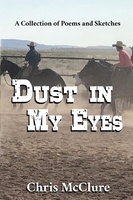
Check out my book!

Dust In My Eyes
McClure, Christopher P.

Monday, April 13, 2026

 Surprises

There are good surprises, bad surprises and sometimes simply the unexpected.  We all hope to avoid the bad ones, but they tend to sneak up on us at unexpected times.  I guess that's what makes them surprises.

Surprises interrupt the sameness of our lives.  They sometimes kick us out of our well-trodden ruts into new territory.  That's where we grow.  Without newness, without surprises, without deliberately seeking the unknown, we stagnate and slowly wither.  For that reason, the bad surprises can have positive impacts on our life.

Much of the impact of surprises lies in our attitude.  If we keep a positive focus, even the less-desirable surprises can be turned to our benefit.  That's easy to say but sometimes difficult to practice.  That muscle of having a positive attitude needs to be exercised daily and our reactions to the unexpected honed when the impact is minor so that when it is of consequence, there is power in our response.

The military understands the concept of preparation better than almost any other type of organization.  They know that muscle memory developed through trained, conditioned responses, can mean the difference between survival and casualty.  We should consider that as we go through our daily routines.  When times are good, we should develop the skills and attitude for dealing with those times when the tide turns against us.

We discovered a nice surprise yesterday; a plant that I had never seen before growing at the edge of our place near the county road.  The beautiful pink flowers of a Bristly Locust (Robinia hispida) drew our attention as we looked out at light rain drifting across the meadow.  Further investigation revealed that there are small, hair-like stickers on the stems.  It is native to the Southeastern U.S. and is sometimes grown as an ornamental in other areas.  It is a legume which means that it fixes nitrogen in the soil and it is an important species to native bees.  The USDA promotes it for use in erosion control.


Saturday, April 11, 2026

 Reaching for the Heights

Trees in a forest tend to grow taller, straighter and faster than those standing solitary upon the plains.  In the quest for light, they shoot quickly toward the nearest source which is typically far above them where the leaves begin to thin and small slivers of the sky are exposed.

There is a price, though, because many of them outgrow the resources available in the soil and they are often weakened and perhaps more susceptible to disease and insect due to poor nutrition.  The large numbers which begin life near simultaneously as a result of one year's seed crop will quickly thin to a handful and then if competition is intense, perhaps none will survive.

A lone tree which is exposed to the elements will be stronger.  It is often somewhat stunted due to the constant battle against the elements, but it also doesn't have to contend with others of its species for the nutrition carried in the soil at its feet.  It tends to spread more widely and occupy a much larger space.

There are many parallels in business and in life.  I will leave it to the reader to draw them.  If you are so inclined, leave your thoughts in the comments.

Below is a photo of one of the many tall Loblolly Pines (Pinus taeda) which grace our small corner of Texas.  I would estimate this one to be 65-70 feet tall.  Others in the background likely exceed 80 ft.  They are very fast growing and have filled the woods with seedlings.


Friday, April 10, 2026

 Looking For the Bright Spot

Over time, when in a routine, our days begin to become one of sameness.  Repetition breeds familiarity and it is only with effort that we push ourselves beyond the well-trodden paths that become ruts.  Many times, failure, or at least a sense thereof, is the result of falling so deeply into those ruts that escape seems impossible and efforts futile.

A disciplined retraining of how we look at life is necessary to avoid such pitfalls.

There are many ways such retraining has been defined.  One is to count your blessings each day rather than to dwell on the struggles.  Another is to focus on the good rather than the bad.  I like to say that the key is in looking for the bright spots.  Search for things that bring joy, even if only fleetingly.

Those moments of joy can be as simple as a cup of coffee on the patio listening to the birds sing.  They might be found in a few minutes of devoted attention from a favorite pet.  For some it can be the voice of a friend over the telephone after an absence.  They are moments that resonate with vibrancy in our hearts and minds in ways that the humdrum existence of the familiar motions of getting through the day tend to muffle.

As I first sat at my desk this morning, I looked out the window to see a bright red Cardinal perched on the bird bath.  The vibrant color against the sea of greens, browns and grays of the normal day made me smile.  In Cherokee mythology the Cardinal is associated with the sun and is a symbol of protection and good luck.  Other myths link the Cardinal to visitation from a deceased relative or friend.  To me it was simply a pleasant beginning to the day.

Any time that I am out and about I am looking for those bright splashes of color.  Frequently it is the small birds of various species who flit between the trees in their search for food, but often it is the flowers.  Many of the flowers such as the pear and blackberry are white.  They are less easily spotted than one might expect.  The stark white blends into the mottled shadows at times and remain unnoticed until you are practically upon them.  Others, such as the pink of the Redbud trees which have now disappeared behind curtains of green, are easily spotted.  Most of those spring colors are gone, but yesterday I found one I had seen previously but never really investigated.

Oxalis articulata, the Pink Sorrel, is a beautiful plant that might be mistaken as a clover.  It is native to Northern Argentina, Southern Brazil and Uruguay but has been introduced throughout Europe and many other regions of the world primarily as a "window box" ornamental.  It grows from rhizomes which spread beneath the soil.  In some areas it is used as a cover crop and in others it is considered a nuisance weed.  It is also considered a symbol of good fortune.


Thursday, April 9, 2026

 Life Will Go On

One of the morning rituals at our house is to open all the blinds to both let in the light and allow us to see the early sun begin to reveal the scenes of the day.  This morning as I sat down to my computer, I observed a pair of Cardinals in a mad dance of courting flight among the large Sweet Gum trees which grace my view.  He was in close pursuit when they disappeared among the leafy green of the canopy.

They must have disturbed one of the Eastern Bluebirds with their antics because one darted from the vicinity where the scarlet pair had disappeared and dashed to the ground where it snatched some morsel from between the blades of grass before returning to a limb where he could enjoy his repast.

Since those scenes, as I sit here, I have observed a duck glide through the trees to land on the pond and disappear somewhere along the shore.  A small woodpecker -- possibly a red-bellied woodpecker -- circled the trunk of one of the large trees in search of his morning meal -- a female cardinal landed briefly on the bird waterer which stands beneath the trees and numerous other small winged creatures continually dart both near and far within my vision though I am unable to determine their species.

In the hormonally driven spirit of spring, a pair of Mayflies briefly appeared just outside my window, locked together in flight.  Maybe the Swallows will thin their ranks before the new crop arrives.

The proliferation of life results in the fruits that maintain the living.  The photo below is of a Tiger Swallowtail finding sustenance within the flowers of a wild blackberry.  His quest for life will spread the gametes which continue the survival of the species which sustains him which in turn will feed the birds, mammals and insects which will then feed others.  Life goes on.


Wednesday, April 8, 2026

Maintenance

One of the pitfalls of ownership is the need for maintenance.  Perhaps that is why society has moved to more of a disposable mode rather than one in which quality is demanded but also comes with requirements for continued investment in its care.

The demand for maintenance extends to our bodies, minds, spirits and emotions.  Taking care of our health in these areas is needed if we are to live quality lives.  Hopefully we each demand quality in life.

 Perhaps that genetically programmed need for maintenance of our bodies should serve as a model for the things in our care.  Instead of a disposable society we would begin to see a gradual improvement of quality that would result in less demand for landfills and scrap yards.  We would see products that lasted for lifetimes rather than months.

Such an approach to economy might require slightly higher expenditure up front but considerably less over a lifetime.  It would demand a complete change in the operating philosophy of manufacturing.

Most maintenance is simply the expenditure of labor.  As a society we seem to prize our leisure much more than we do pride in our ability to maintain that which is given into our possession or, better yet, which we have earned through our efforts.  It seems strange that we would work harder for someone else in a job that is often thankless in order to purchase things which are of low quality and designed to wear out (functional obsolescence) in a short period of time requiring us to work even harder to earn the funds to replace that item.  Why not live more simply and focus on quality as opposed to amassing quantity?

I suppose I'm wandering off into the woods a bit with my topic, but that is relevant.  Each day we seek to invest at least some time in maintaining our property.  Yesterday was a return to a task which started shortly after we acquired this place.  It is the removal of a massive fallen log.

It is one of many that have fallen through the years prior to us purchasing.  It was one of the reasons we could manage the acquisition -- neglect by the previous owners.  At this stage in life my labor is not as highly valued by the public as it might have been previously, but it is something that I value.  The physical efforts invested in returning this land to beauty and productivity helps to maintain and improve my health physically, mentally and emotionally.  I find peace in the efforts and peace in the results.

The large log that you see fell at some time in the past.  In the foreground is the tip of an oak tree that was flattened to the ground when it fell.  The base of the small oak was at least 4 inches in diameter and it was around 20 feet tall at least.


After a period of labor, you can see that the small oak tree is now gone and the process of cutting up the large fallen pine continues.  The cut pieces in the foreground are something over 2 feet in diameter.  They will be split into pieces for burning in our fire pit.  There is another 40-50 feet of large pine yet to go.

Tuesday, April 7, 2026

 Opportunistic

Despite the challenges of seasonal allergies, I masked up yesterday and mowed the front lawn/meadow.  I hate wearing a mask.  It was one of my greatest pet peeves during COVID and remains so today.  Even today, six years after the so-called pandemic we continue to see masks -- often for no reason but to hide one's face.

Masks can make it difficult for me to breathe.  In the case of mowing, however, breathing through a mask is better than dealing with lungs full of dirt and congestion as a result of foregoing one.

I struggle with calling the area in front of our house a lawn.  To me it is more of a small meadow with its mix of native species such as vetch and clovers, and the occasional single pea interspersed throughout the common Bermuda.  There are early buttercups and fledgling weeds of many species such as the giant ragweed.

Near the gnarled roots protruding above the ground near the large Sweetgum trees, there are vines and seedling trees sprouting through the soil in their quest to gain a toehold on life.  Most are gone now, mowed to a nub of their former selves where many will succumb for lack of light and room as they are crowded out by species that thrive from the artificial grazing to which they have now been subjected.

As I mowed, I noticed a pair of Crows land near me.  Crows tend to be very standoffish and untrusting of humanity, but in this instance, they saw me for what I represented in the moment -- opportunity.

Being one of the more intelligent species of winged creature, these Crows saw that my mowing stirred up potential morsels of nourishment for their varied palettes. Crows, like humans, are omnivores and eat a wide variety of things such as seeds and nuts, insects, carrion and sometimes even small animals such as frogs or rodents.  My activity sent many small insects into motion in their effort to escape the whirling blades of my monstrous (to them) machine and as they scurried to safer environs, they sometimes met their fate in the crushing beaks of the sleek, black winged demons.

One even allowed me the opportunity to photograph him as he strutted across the lawn.


Monday, April 6, 2026

In Arm's Way

 Spellcheck wants to correct my title to "In Harm's Way" rather than the way I intended.  It must not understand subtle humor.

Most people don't understand subtle humor either.  For many, only the purest "slapstick" humor is necessary, but to me that is the worst kind of humor because it is usually based on harm of some kind or another.  Maybe in the case of my title that would be appropriate since the word in question is actually "harm."

Along with the beauty of Spring come subtle irritants -- dangers if you will -- that slip in without notice unless one is acutely aware of the potential.  Sometimes that danger is disguised as beauty.  The pollen in the air which has driven my allergies wild is one of those dangers, but another which is a severe irritant to me lies lurking in the woods where I have been working to clear out old deadfall and unwanted brush.

It has lush green foliage and decorates many of the larger trees.  It is the Toxicodendron radicans -- also known as Eastern Poison Ivy.  As the "Toxo" portion of its name implies, it carries a toxin that is an irritant to those who are susceptible.  I am one who is.

Growing up in the Texas Panhandle I never had to deal with such a plant.  Most of our irritants had thorns.  Here, in the northeastern portion of the great state in which I dwell there not only are plants with thorns, but there are also plants that attack simply by touching them.  Springtime is the worst time for it because the toxic oils are at their highest level.

I usually try to wear long-sleeved shirts while working near the lurking vines, but even that is not always enough preventative.  The oils can get on the cloth and even be spread to other areas -- such as the face when I wipe the sweat from my head.  But the most common place that I seem to receive doses of the toxin is my arms.  It takes a few days before they break out into blisters but often begin itching within just a few hours.

There are multiple species of toxic plants that inhabit our woods.  Poison Oak, Poison Sumac and other varieties of Poison Ivy can be found.  The most common on our place is the Eastern Poison Ivy.  If you've never seen it, it is pictured below winding up the side of a large pine tree.


Saturday, April 4, 2026

Raining

This morning we awoke to rain.

Steady, gentle rain.

I love the sound of rain.

It cleanses the air.

It quenches the thirsty ground.

It relieves the heat.

It drips and trickles and splashes.

It washes away the pollen, the dust, the leaves.

It renews us and it soothes us.

It sluices the cares of the moment into the growing stream.

The birds are silent, but when the cloud lifts, they will sing.

Sometimes we need a storm to wash away the debris.

Sometimes we simply need a gentle rain.


Friday, April 3, 2026

 Allergy Daze

For the last few weeks pollen has coated the surface of everything outdoors.  The thin yellow film on vehicles lets you know what you are breathing when outside.  Those pollen spores are major irritants to many allergy sufferers such as I am.  Despite the beauty of the Spring, it is a miserable time of year.

All of us must deal with irritants in life.  Hay fever and the various complications of a persistent cough due to perpetual drainage from my sinuses is an easy one to identify and is part of my life since as long as I can remember.  For some reason, this year seems worse.  Perhaps it is a heavier load of pollen, but more likely it is just another symptom of aging.  My body doesn't resist the onslaught as it once did.

In order to manage the allergies, I frequently resort to various over-the-counter medicines.  Those remedies -- or I should say, symptom mitigators -- often leave me feeling somewhat dazed and not completely clear-headed.  Hence, the title of this post, "Allergy Daze."  Aren't you glad I spelled that out for you since it wasn't obvious (ha).

Sadly, the current wave of allergens is only the beginning.  Blooming plants will continue to spew forth their gametes throughout the Spring and Summer and the only brief respite I can anticipate will be sometime after a heavy frost next Fall.

A couple of days ago I spotted the plant in the photograph posted below out in the meadow in front of our house.  It presages that ongoing battle.  Ragweed.  It will meet an early expiration if I am able to get to it in time.


Thursday, April 2, 2026

The Pond

This blog is a place where I express some small piece of my thoughts as I start my day.  Yesterday I mentioned our Texas Sage (Barometer Plant) and showed a photo of it blooming which is a strong predictor of rain.  It started raining around 4:00 a.m. this morning and was still lightly raining at 8:00.  Ah, if only I could be so accurate in my predictions!

As I look out my window this morning I see our pond in the distance.  It has been mentioned in previous posts and is a comfort to the eye.  This time of year, everything is green and the leaves are becoming fully unfurled on the trees which are abundant on our property.   That abundance occupied much of yesterday as we spent several hours of the day clearing away dead, fallen limbs, tangled vines and unwanted vegetation.  It is a lot of work but is something that I enjoy doing because it is easy to see progress as small pieces of the puzzle begin to show signs of becoming what we want them to be.

The pond on our place is one of those pieces of the puzzle that I haven't yet decided how to handle.  On one hand, I like it as it is.  It has the character of a pond lost in the deep woods of East Texas.  On the other hand, it doesn't teem with life in the way I would expect.  The water is full of tannins from fallen pine needles and trees. We see many turtles perched on the logs which have immersed themselves in the water at the behest of the Texas wind and in the shallows, you can see small fish -- minnows or shad -- darting along as if seeking shelter from something larger.  What we don't see are clear signs of larger fish.  Sometimes a small silvery creature will make a splashing leap above the surface, but it is rare.

In asking a friend what he thought it would cost to clean out the pond and do some rehabilitation, he stated that it was going to cost over $20,000 for his own and thought ours might require an even larger expenditure.  We don't have that kind of money laying around for such a purpose.  There are numerous other things that take a higher priority.  So, for now, I think we will enjoy the pond as it is.

Like so many things in life, we have to weigh the current investments against the expected future benefits.  With a lengthy list of priorities, that can sometimes be a challenge.  In time we will deal with it.

Given the title to this post, you may have expected something more along the lines of what Thoreau would have written.  

"It is life near the bone where it is sweetest." -- Henry David Thoreau

Wednesday, April 1, 2026

 Forecast

The other day I posted about using native plants in our flower beds around the house.  Texas Sage was the one in the photograph that accompanied the post.  It is known as the Barometer Plant and in South Texas it is known for predicting rain with its blooms.  Well, ours is blooming like crazy even though it has only been planted a short while (photo at bottom of post).

We certainly need the rain, but not as desperately as most of the rest of the state and the Southwestern U.S. in general.  Drought conditions continue and rainfall deficits have left many lakes far below their desired levels.  This condition doesn't bode well for the cities and small communities that depend on those lakes for water.

It also continues to pressure the cattle industry.  High beef prices in the grocery store are directly related to declining numbers of cattle and a growing population that demands high quality protein.  We will not see significant rebuilding of the national cow herd when severe drought limits the availability of suitable forage for grazing.

I am concerned that many people both within and outside the cattle industry will seek to blame the problem on something other than the weather.  Generally, it is the beef packers who are saddled with fault when it comes to beef prices.  It is simple economics surrounding supply and demand with production constraints affecting both sides of the equation.  Most don't see it that way and will call for government intervention.  Such intervention will be directed at the packers because they are everyone's favored whipping boy.  It should instead be directed at urban sprawl which is removing suitable grazing land at a pace faster than drought.  The politics don't work so instead of fixing the problem, government intervention will likely only make it worse.

Oil prices are another issue which is constraining not only to cattle production but to almost every industry.  The blame will fall squarely on the current administration and their actions in Iran which have temporarily caused supply disruptions.  This is one where political pressure again will dictate how and when we withdraw from that action rather than suffering the short-term pain in order to receive the long-term gain of curbing the radicalized regime which has long declared "Death to America."

There are many other issues that we currently face, and everyone has their opinion on how they will turn out.  We all have a "forecast" for the future, and it is based on our personal experience, education, and otherwise gained knowledge.  It's too bad that none of it is as reliable as our little Texas Sage, the Barometer Plant.

We had to cage the sage in order to protect it from rabbits as well as a dog that thinks the flower bed is his napping ground.  Pardon the rusty T-post -- I believe in endless recycling.


Tuesday, March 31, 2026

 Things That Make You Go, "Hmmm...."

This morning I spied a duck on our pond.  It is a good way down to the pond and it was impossible for me to make out any detail -- even with the aid of binoculars.  It didn't look like any duck that I was familiar with.

We did a little quick research on the computer, and I still was unsure of what it might have been.  I suppose it will go in my "Hmm..." category for the day.  It was interesting, made me stop and think, but it remains in the unknown category for me.

I find that in a lot of things.  The Internet has made researching the unknown much easier than it once was.  I look up things frequently and often find that my preconceptions needed adjustment.  One of the keys to learning is to realize that what we know may not be accurate and must be refined as additional knowledge is accumulated.  With the duck in question, I can only hope that he returns to give me a better look at some point in the future.

They say that curiosity killed the cat, but I find curiosity to be the fire that kindles learning.  You likely will note in the things I write that I am curious about many subjects.  Sometimes my travels down the trails of trivia border on the ridiculous, but even those things can provide some minor enjoyment.

Yesterday I continued on my current task of cleaning up dead and fallen tree limbs and brush on our place.  The neglect of years created the opportunity for us to acquire this piece of land but also came with the added price of the work necessary to bring it up to our expectations.  Since we are currently not under a burn ban, I am trying to burn as much of the gathered debris as possible.

The photo below is the last of a pile of limbs that were present when we purchased the place.  We have only been out of the burn ban a short time which delayed me in disposing of them.  I took a photo of the fire late yesterday as I sat enjoying gazing into it.  I don't know what it is about a campfire, but most people enjoy gazing into the flames.  This morning as I looked at the photo before posting it here, I noticed that one of the stones bordering it is unique.  I don't know where it came from, but it appears to be a broken piece of statuary.  It's just one of those things that make me go, "Hmmm...."


Monday, March 30, 2026

 Contemplation

What is it that sometimes causes us to become so lost in thought that we lose track of time?  It seems to go against the natural "wiring" of our brains that is a result of survival through the eons.  Alertness, awareness of surroundings, those should be constant since the genetic lines which resulted in the survival of our ancestors must have had something going for them in order to beat the odds against oblivion at the will of some predator.  Survival is wired into our DNA.

Perhaps it is the protective nature of our species that has allowed those who might lack the basic survival skill of awareness to thrive and reproduce.  Those who have strong doses of that survival skill tend to provide protection and oversight which allow those less suited to continue on their merry, oblivious way.

Those woolgatherers are often the ones who end up espousing some of the strangest causes.  It is likely that their mind travels into realms where those more attuned to survival simply ignore the irrelevancy of the errata and move on to more important things.  The softness of our society has allowed those "thinkers" to proliferate and fill the air with their invectives against perceived injustice when the reality is, they are protecting those even less fit for survival than themselves.

Maybe that's it!  Part of our genetic wiring is telling us to protect those less capable than ourselves and so we are shepherding in the slow degradation of our species through such behavior. It is a built-in mechanism that will result in the eventual cleansing of the species when civilization collapses.

Why would we be wired that way?  Maybe it is because none of us would survive without that basic tendency to protect each other.  It is too bad that tendency has been corrupted with greed and the self-serving manipulation of those less capable.  The strong tend to exploit the weak or less capable.

The photograph below is of a large Loblolly Pine tree (Pinus taeda) located on our property.  The Loblolly is native to much of the Southeastern U.S. and is a very important source of wood for construction and for pulping to make paper.  It is fast growing and may reach heights well in excess of 100 ft.  Some of the pines on our property have been there long enough to be approaching that 100 ft. threshold.  They annually shed seed-filled cones to continue the spread of the species.  If left un-thinned, they will be surrounded by younger trees ranging from seedlings to those many 10's of feet in height.  Eventually, most of those seedlings will die and only the hardiest will survive.  Survival of the fittest once again.  Maybe humans need to mimic nature in that regard.


Saturday, March 28, 2026

 Flight of the Bumblebee

There are over 250 species in the genus Bombus which we know as Bumblebees.  Charles Darwin called them the Humble Bee in his major work, "On the Origin of Species."  The name "Bombus" is from the Latin for "buzzing" or "booming."

In the Walt Disney film, "Fantasia", we hear the "Flight of the Bumblebee" which was an orchestral interlude composed around 1900 by Nickolai Rimsky-Korsakov for the opera, "The Tale of Tsar Saltan" in a representation of the turning of Prince Guidon into a bumblebee so he could visit his father, Tsar Saltan.

They are important pollinators and sometimes raised domestically for the pollination of tomatoes grown in greenhouses.  Unlike honeybees, bumblebees can sting repeatedly because their stinger is not barbed and can slide in and out of their victim without injuring themselves.  They are not usually aggressive however and rarely sting unless being tormented or disturbed.

Yesterday we had an unwanted visitor to our corner of Texas -- a skunk.  It was down by the pond, and I took steps to discourage it from exploring further for fear that our canine watchdog, who really only watches for an opportunity to be petted, spotted the small black-and-white critter and went to introduce himself.  Fortunately for all, that was accomplished and the discouraged visitor headed across the road and disappeared into the thickets of a nearby creek bottom.

I walked down to check and be certain that he was gone and in doing so noticed a couple of large thistles that had grown near the edge of our property and investigated.  There, in the top of the largest flower, at the top of the largest thistle, were two Bumblebees.  One was headfirst buried into the heart of the blossom while the other walked frustratedly around the rim of the flower seemingly awaiting his turn to partake of the nectar.  It was obviously a Kodak moment.


Now I must decide whether to allow the thistles to remain for a while or to remove them.  I think a compromise of a few days is in order.  It's good to see the bees thriving.

(For more information see "Bumblebee" at Wikipedia from which a portion of the above information was found.)

Friday, March 27, 2026

 Genius

This morning, Thomas Jefferson is on my mind.  He is probably my favorite President although he is certainly not without controversy.  I think what sets him apart to me is the breadth of his interests and his affinity to agriculture.  He was wealthy but always in debt, likely because his varied interests kept him from focusing on making money.  He was too busy exploring new ideas or building his library of which he had three different ones during his lifetime.  The first was lost to fire, the second he gave to the Library of Congress after it was destroyed by fire by the British and the third was those books collected subsequently.

He is an interesting individual of what I would describe as "broad genius."  Most of the time when we think of genius it is in regard to individuals who have a level of understanding which surpasses the norm, but often in a very narrow field (Stephen Hawking comes to mind).  They typically have the capacity to learn deeply outside their primary field of expertise but rarely do so.  That "focused genius" is what we recognize.

I believe a significant number of the Founding Fathers of our country had "broad genius."  The most prominent to come to mind is Benjamin Franklin.  Others would include Thomas Paine and James Madison.  Those were the types of genius rarely seen today in our world of specialization.

Perhaps Elon Musk would fit into that category and possibly our current President.  Whether you like them or hate them, they exhibit the characteristics of "broad genius" to me.  I don't wish to make this blog political and would appreciate that any comments avoid politics.  I am merely observing the behavior and accomplishments.

Back to Jefferson -- he was one of the most advanced agriculturalists of his time.  He constantly sought to improve his production practices and breadth of knowledge.  In some ways he may be at least partially the inspiration for my looking at the medicinal and other uses of the various plants growing on our small property.  Today I wish to point out the Dewberries which are just now pushing their way up through the debris of winter.  Dewberries are of the genus Rubus and are closely related to Blackberries.  There are many different varieties.  They typically grow low to the ground and send out long tendrils as they seek to spread across the landscape.  It is just now the beginning of their time to bloom in our part of the world.  Besides their uses in cobblers, jam and pies they are often eaten raw.  What is not widely known is that the leaves can be used to make an herbal tea (tisane).  It is claimed to aid in relaxation, sleep and immune health.  Many birds, mammals and insects love them.


Thursday, March 26, 2026

 Tangled

The woods of Northeast Texas are often a tangled mess of trees and vines.  Many of the vines are not particularly friendly such as Poison Ivy or Greenbriar.  Often, however, the most prolific vines are Honeysuckle.

Sometimes the vines wind around young trees to the point of killing them due to strangulation.  They tightly surround the tender bark and as the tree grows, the vines cut into the bark and cut off the flow of sap to higher points in the young trees.  Eventually the trees succumb.

We like the biodiversity of plants growing on our small piece of Texas, but some have been allowed to get out of control.  It seems a never-ending chore to tame them into spaces that make better sense for managing the land.  It also allows less aggressive species to flourish since we are unlikely to use nature's tool of fire to burn the dense undergrowth.  There are far too many houses within range.

I am not a fan of using chemical means for control, so much of our effort is simply mechanical.  It is more labor intensive, but the result is flourishing plant, insect and animal life.  One small example is the Tiger Swallowtails of which I posted a few days ago.  We see many of them daily.  Yesterday we saw our first Monarch butterfly of the year.

The benefits of our efforts will be realized over coming years but occasionally the reward is immediate.  The photo below is of Coral Honeysuckle (Lonicera sempervirens).  The flowers attract Hummingbirds, Bees and Butterflies.  The fruit is favored by many bird species.  Traditional medicinal uses include for asthma (dried and smoked), for bee stings (chewed and applied to the sting) and for sore throats and coughs (a tea).  I just think it is a nice splash of color against the greens and browns of the forest.


Wednesday, March 25, 2026

 Establishing Routine

When I first started Blogging it was a response to being challenged to do so.  I decided that committing to write something every day for 30 days was enough to either establish the habit or to decide that it was not for me.  The result of that commitment led to writing a couple of columns for a trade publication and to writing and publishing a small book of poems and illustrations (the book can be found in a small ad at the top of my Blog page).

There have been times through the years since that beginning that I have lapsed for extended periods for various reasons.  Sometimes it was due to significant life changes such as a job change or a move or both.  At other times it was likely due to discouragement resulting from a lack of readership.  I had to learn, or re-learn, that I was doing this for myself and not for others.  The discipline of writing is certainly a solitary pursuit, and most writers never achieve fame or a great following.

Now that I have entered into a time of retirement the realization that one of my strengths through the years was to write has prompted me to reignite the daily discipline of writing.  That doesn't mean that I will Blog every single day, but I do intend to write something on a regular basis and am attempting to make it a part of my established daily morning routine.

Retirement really isn't something that I intentionally planned for this particular time.  I expected it to be a few more years away.  It happened though and making the best of it is my current focus in life.  The symbolism associated with Spring and the budding trees along with early flowers pushing up through the soil seems especially relevant to where I am in life.  I am choosing to make the best of it in spite of all the challenges which seem to be working in opposition.

Yesterday we noticed the first of the Irises blooming along the road winding through the trees to our house.  They seem to be randomly situated as if they were wild, however I suspect they are the remnants of a deliberate planting by some previous owner of this small corner of the world.  Irises are common throughout the world and prominently appear in artwork.  They have been used for medicinal purposes by many people seeking natural cures -- especially for stomach cramps by making a tea of the dried roots.  Certain varieties are used to help filter water.  The plants remove many particulates and chemicals, clarifying the water.  Mostly, I just think they are a beautiful, showy flower.


Tuesday, March 24, 2026

 Cleaning

There is an old shed on the property that we purchased this year.  We have been doing some cleaning in order to be able to utilize it.  One corner of the roof has been destroyed by a fallen tree which will need to be removed and then the roof repaired.  I'm sure that will be the subject of a later post.  In the meantime, we decided to clean up and haul off the leftover junk scattered about the floor with the intent of parking a small tractor there where it will be protected from the rain.

Along with the rusted cans, nails and bolts scattered on the floor there were piles of leaves and other forest debris that had fallen through the hole in the roof or blown in through the open front.  We used rakes to pile the loose things and then spent a good bit of time on our knees picking up nails, bolts and other sharp pieces of metal that might potentially damage tires.  I hope we got them all.

I must admit that I get angry when cleaning up messes left by other people.  I was taught that when I left a house, piece of land or anything else that it should be in the best condition that I could possibly leave it.  I was taught to clean up my own messes rather than to leave them for others.  I hope my children and grandchildren have learned to leave things better than they found them.  Just think what that type of attitude would do for our country.

One of the small creatures we disturbed in our cleaning is in the photograph below.  It is an Eastern Bark Centipede (Hemiscolopendra marginata).


Monday, March 23, 2026

 Going Native

As is obvious from my last few posts, Spring is on my mind.  It is planting time.  To the extent possible we want to use native plants which are indigenous to our area for our landscaping.  Our first plantings at this new home are Texas Sage (Leucophyllum frutescens). It is not a true sage but is in the figwort family.  It is known by many other names but the one I find most interesting is "Barometer Bush."  It is an appropriate name because when we lived in South Texas where it is commonly found across the semi-desert scrubland, when it blooms you can expect rain within the next 24-48 hours.  Another name is Cenizo.  Historically, natives of northern Mexico where the plant commonly is found, made tea from the leaves.  Its medicinal uses were for treating colds and congestion.

Below is one of ours which we planted near our front porch.  Over time it can grow up to 10 feet tall.  We will keep it pruned back so that it doesn't block our view.


Saturday, March 21, 2026

 Front Porch Rocking

I grew up hearing about sitting on the front porch in a rocking chair watching the late afternoon fade into evening, but I never thought that would be me.  

The place we recently moved to is very conducive to that type of activity especially since we bought a couple of wooden rocking chairs to set on the front porch.  The weather has been absolutely perfect.

In the photo below you can see piles of raked twigs and Sweet Gum seed pods.  I'm not quite through with the task but expect to complete it this morning.  It was certainly relaxing to end the evening looking out toward the pond just enjoying the peacefulness of the birds singing in the trees.


Friday, March 20, 2026

 Springtime

Springtime brings optimism.  It is a time of fresh beginning -- for the year and sometimes for our lives in other ways.  It is a time to clear out the detritus of winter and begin the freshening for what is to come.  It is a time of flowers and budding trees, of yard work and planting, of newborn animals and of re-born hopes.  The air is filled with scents and pollen and the buzzing of insects.  It is butterflies and mosquitos.  Okay, maybe it's a mixed bag in some regards.  But it is Spring and I will let optimism rule.  The Redbud tree in our front yard is the perfect symbol.


Thursday, March 19, 2026

 Subtle Differences

It is sometimes the little things that make all the difference.  I'm certain there is some deep application for this minor observation, but this morning as I write, the brain fog obscures whatever brilliant revelation may be hidden there.  Fortunately, I have an illustration.

The bright yellow Tiger Swallowtails have been in abundance here on our small piece of the world recently.  Once the signs of Spring became sincere rather than a quiet creeping of swelling buds and surging stems of daffodils, they began making their way into our view as they fluttered between the early blooms of flowers pushing through the dry mats of last year's grasses, or into the blossoms of early blooming trees.

I thought they were all of the same until I looked more closely at the pictures and did some research.

In the photo is what I believe to be a male Tiger Swallowtail.  He is slightly less showy than his female counterpart and doesn't have the blue and red spots of the female seen below.  Am I correct?

Let me know in the comments.  I know someone out there is bound to be an expert.


Wednesday, March 18, 2026

 Searching for Relevance

I was once told that the second strongest human emotion is the craving to be recognized/appreciated/seen as important.  Since hearing that statement many years ago, I have noted numerous times that it seemed to drive behavior.

One of the first places to note it was watching a child seek the approval of a parent.  "Daddy look at me!"  It is also sometimes a factor between spouses -- we don't want to be taken for granted but recognized for our contributions -- for the things that we do well.  Too often criticism for failures is more common than recognition of the positives.

I also believe that craving for recognition is what drives many to create on social media.  Arguably, this post might be an example.  I tell myself that I am writing to relieve a compulsion that I feel deep inside me to write my thoughts.  It helps me to organize them, and it is one way that I choose to exercise my mind.

The craving for recognition sometimes leads to competition between individuals that might lead to negative impact on a relationship.  This can happen between siblings or between spouses.  There is nothing wrong with a competitive nature, but it must be balanced.  An individual should find the things that they enjoy and simply do them to the best of their ability rather than being jealous of the recognition others might receive by pursuing the things that give them pleasure or satisfaction.  Instead, jealousies drive wedges.

I don't really know what prompted this post other than it is something that has been rolling around in my mind.  Now, to find a picture to include -- I like the one below which is of three peahens sitting on a fence at Bent's Old Fort National Monument in Colorado.  They were in the shadows, and the photo creates a kind of silhouette that made me think of three individuals sitting and gossiping.  I guess that's a bit like the search for relevance -- gossip tends to put down others in an attempt to make us look better.  It's not healthy for relationships either.


Thursday, March 12, 2026


Dealing With Obstacles

As I sat at my desk yesterday morning, out of the corner of my eye I caught the movement of a dead tree falling.  The exclamation point of the reverberating crash swept across me as I looked to see just what happened.

The driveway on our small acreage is long and winds around a small pond and through the trees which surround it.  The deadfall occurred about one hundred yards from the house at the edge of the thickest part of the small, wooded area.  It completely blocked the driveway, which is our only way to exit the property.  It had to be dealt with before we could even go into town.

After completing what I had been working on, I loaded up my chainsaw and headed down to begin the process of clearing it.  The upper end of the old dead tree was all that crossed the drive, but it varied in diameter from well over a foot to about ten inches at the narrowest point.

I was reminded of how unexpected obstacles sometimes affect us, creating barriers that must be handled before we can continue our way.  It occurs in business and it occurs in life in general.  There are always reasons for their occurrence.  Sometimes those reasons are obvious and at other times we never understand why they happened.  In this case, as in most cases related to business, the reason was obvious.  It was neglect.

We almost always ask why.  Why did this happen?  In this case it was due to a higher-than-normal wind and a long-dead tree. 

I noticed the tree standing in the small patch of woods a few weeks ago.  We recently bought this place and there is a lot of work that needs to be done.  There are several dead trees that need to be removed, but their urgency is much lower than this one which created the barrier to our ingress and egress.  As I looked at the wooden barrier which lay across the road, I noticed that woodpeckers had been working on it.


The woodpecker damage is a symptom of a much deeper problem – wood-boring insects that likely killed the tree.  The woodpecker holes are obvious in the fallen trunk, but many of the exterior rings looked like the small piece of rotten wood lying in the foreground.  Again, I am reminded of how we often notice symptoms of a problem – the woodpeckers avidly drilling into the tree – but sometimes fail to address the systemic problems that are truly causing damage to our lives and our business organizations.  Woodpeckers should alert us to the termites and beetles which are constantly burrowing into the trees just like symptoms such as a tire which frequently goes flat should alert us to the need for a new tire.  Usually, we deal with the symptoms but fail to pursue the root cause of the problem.

The first step is to remove the barrier to progress.  In this case, it was to remove the fallen tree from the road.  It required a little bit of work but was accomplished expeditiously.


Once the obstacle is removed it is a matter of figuring out how to prevent the problem from occurring.  Fortunately, in our case, it is simply a matter of getting rid of all the dead trees that might fall.  It is going to require some work, but it is certainly doable.

Even after spending the morning clearing the fallen tree, there was a significant portion of it left to deal with.  The tree was well over sixty feet tall and we only cleared the top half of it which was blocking the road.  The bottom half – the largest half – which is over two feet in diameter at the base, has yet to be cut up. 


It will be a task for another day.  Again, I am reminded of the business applications.  Once we remove a barrier and can continue operation, we still need to deal with the root causes which created the problem.

Now, there is plenty of firewood for the fire pit.  It’s still going to require some work to transport it to where it is needed and to split the large pieces into usable sizes, but at least something good can come out of it.

Maybe it’s time to do a little campfire cooking!


Friday, September 3, 2021

Fall Calf


 "Look, over yonder,
Close to the treeline,
Do you see that little dark spot in the grass?
It looks to me like some cow
Just had a new calf!

I'll bet its legs are still wobbly
And its Momma ain't far
But, let's ride on over
To make sure it's fine
This baby's the first; at the head of the line!

Why, look there;
She's several days old!


Thursday, September 2, 2021

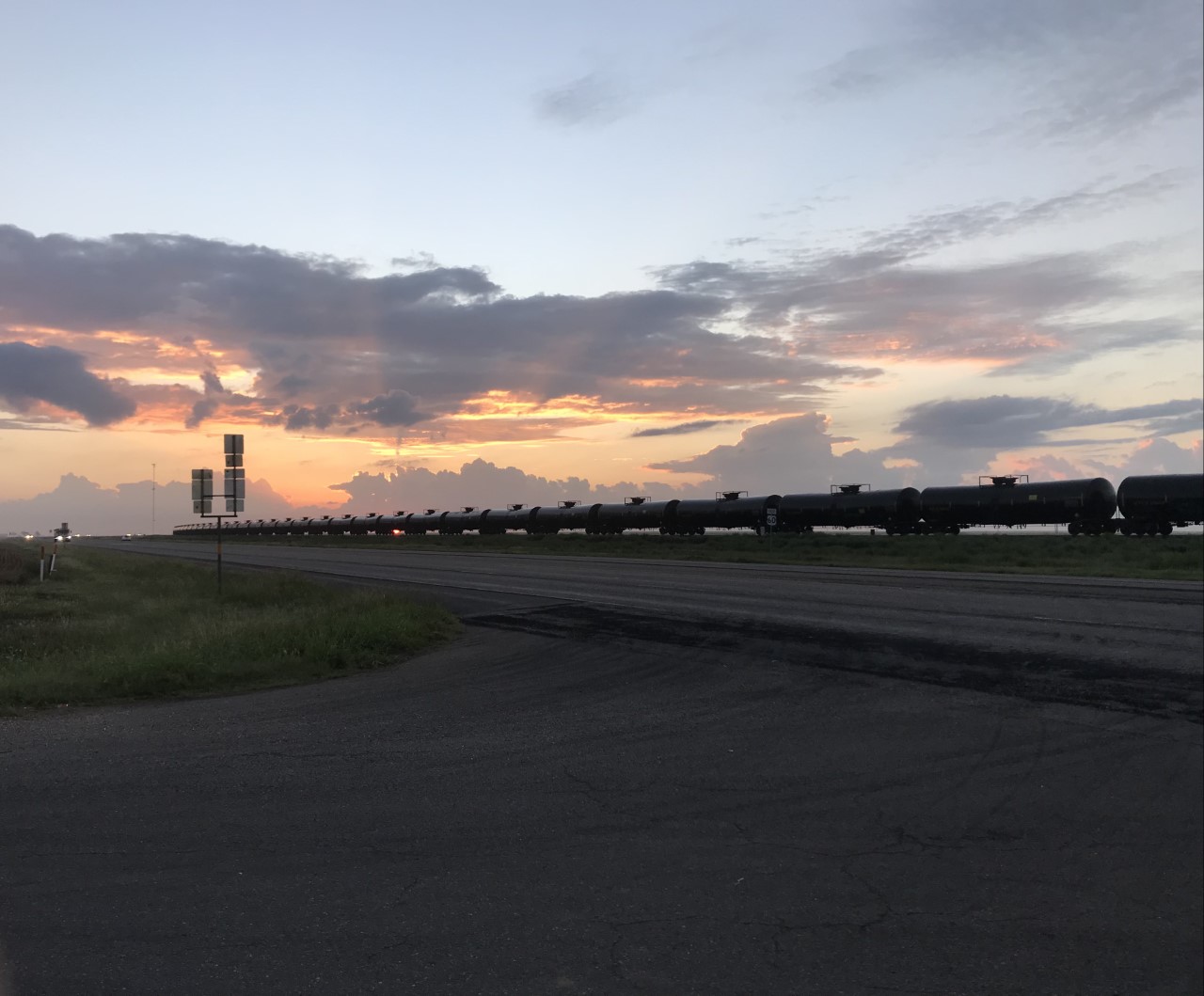
Solar Powered


 As the early morning light
 greets my journey, 
I am struck by the fact
 that the sloshing liquid
stored in the passing train 
holds the same energy 
as the refracting light 
of the dawn.

Thursday, August 26, 2021

From the Top


 The road is often rocky
As to the heights we climb
But, the view from on the mountaintop
Is often quite sublime.

Sometimes you have to climb to the top of the mountain to see clearly what you have traveled through.  But, if you don't make it to the top, what do you do?  Make the most of the climb.  You never know what you might see or, experience along the way.

The photo above is from the top of Mount Scott in the Wichita Mountains National Wildlife Refuge in Southwestern Oklahoma.  I was there when I was very small and vauguely recall watching artillery exercises at nearby Fort Sill from the top of the mountain.  On this recent trip there were no exploding artillery shells, but the day was clear and the temperature comfortable for late August in Southwest Oklahoma.

Wednesday, August 25, 2021

Symbol of a Bygone Time


I know this is not the first time I've led off with the photograph of a Longhorn.  They are picturesque critters and I enjoy seeing the colorful beasts in the pasture.  This one is in fact a Corriente Cross cow and not a pure Longhorn -- whatever such might be.

Painted and splashed with colors galore
She grazes the Great Southern Plains
Not know how symbolic she stands
Of an era dimmed with age.

Once great herds of clicking horns
Trailed up from the brush 
To markets the railways had reached
On their transcontinental quest

Of populating the western reaches
Of a country just beginning to feel
The strength of the mightly economic engine
Swelling with power of imagination

Into the vast unknown lands
Of bewildered tribes who found a new enemy
Much stronger than their ancestral nemises
With whom they had fought for ages.

She and her kind fed the westering hordes
As well as those left behind 
In the growing cities where
Food must be imported from elsewhere.

Today, she is as much a relic
As the American Bison
And the painted natives
That she helped to displace.

Tuesday, August 24, 2021

Inspiration


We must first still our
Thoughts,
Mind,
Body, 
Until in quiet contemplation,
Inspiration
Lights gently upon our conciousness,
Preparing to burst forth
In the brilliant colors of action.

Monday, August 23, 2021

Hoofprints


It has been awhile since I left any tracks upon this page.
The past year hasn't been one to inspire much creativity.

Maybe I should ask,
"What has inspired you this past year?"

Google