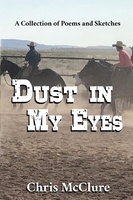
Check out my book!

Dust In My Eyes
McClure, Christopher P.

Tuesday, June 30, 2026

 Downtime

Everyone needs a break now and then.  We need a place of peace in which we can relax and think.  We need to allow ourselves the luxury of "being."

We have found our front porch to be a good place to just sit and relax.  A couple of rocking chairs and maybe a cool drink while we listen to the birds sing and look out toward the pond in the distance.  Sometimes there is conversation but often it is simply sitting, looking and listening to insects buzzing, birds singing and the occasional sound of a car or truck on the highway in the distance.

It's a good place to get your thoughts in order.  To make plans.  Or simply to rest the mind for a time.

We all need downtime.  Our brains need a chance to organize thoughts and our bodies a time to rest.


Monday, June 29, 2026

 Arbitrary Limits

We often limit ourselves through preconceptions.  We define goals toward which we aim yet often are capable of achieving greater.  Those preconceptions are frequently defined by others.

If a child is told that he is a failure he likely will be.  If a person is told they can never achieve greatness, they likely won't.  If one is taught that he must be subservient he most likely will remain that way throughout his life.

Being taught that mediocre is okay is safe.  It reduces the chance of devastating failure.  But it also limits achievement.

How do you teach that reaching for the stars is a worthy goal while also instilling an understanding that failure will happen and can be overcome?  Perhaps the key is to allow struggle to happen.  Encouragement and coaching through failure prepares one for higher achievement the next time around.  We learn more from failure than from success.  The problem is that failure is discouraging and causes reticence to try again.

Those failures can create arbitrary limits on what we attempt if we never establish the attitude and mindset that failure is only temporary.  We must learn from failure and consider it merely a step toward success.  That is when we remove the limits.

We have a couple of very old Crepe Myrtles on our place.  They each have multiple trunks rising together.  One of them is at least two feet in diameter.  They are over 30 feet tall.  Their height comes from age, but also from competing for sunlight since they are surrounded by even taller Oak, Hackberry and other trees which are even taller.  Their struggle for sunlight also causes them to bloom later than they would without that struggle.  They have reached heights rarely seen with their species.  Below is a photo of one of them against the backdrop of the taller trees.  It is just now starting to blossom.


Sunday, June 28, 2026

 Into the Distance

Some mornings as I sit at my desk pondering various possibilities for my daily post, I find myself staring into the distance.  My mind roams across different subjects that seem relevant for the day.  I try to stay away from purely political or controversial themes although I frequently skirt the edges enough to allow for various interpretations.

I often bring up the idea of cyclicity.  It is a part of nature.  Some cycles are short and others are so long that we often don't realize they are cycles.

There are political cycles as well.  We have seen them throughout the history of this country and throughout the modern history of the world.  World War II saw the ultimate clash between competing political philosophies -- Marxism, Fascism, Capitalism, Social Democracy and Oligarchy.  What exploded in Europe was also going on in the United States but the balance between the competing philosophies was different.  The result was that the competing belief systems became entrenched in separate countries -- Marxism in Russia, Capitalism in the U.S., Social Democracy in Europe and various Fascist Dictators in small countries scattered throughout the world.

Those different political philosophies continue to compete to this day.  Each has spread into the domain of the others.  Each struggle for dominance.  At some point we may see an explosion similar to what engulfed Europe beginning in WWI and concluding in a state of equilibrium at the end of WWII.

The borders created at that time were sometimes arbitrarily drawn by the most powerful without regard to the feelings of those contained within.  Those borders have continued to be areas of conflict -- Middle East, Africa and Eastern Europe.

Many people use a plant commonly called Monkey Grass (Liriope muscari) to create artificial borders in their lawns.  They are constantly having to pull grass and other invasive species from those plantings.  Below is a small sampling of Monkey Grass that remains on our place -- planted originally by a previous occupant.  It will likely get to stay.


Saturday, June 27, 2026

 Conformity

This morning I have been watching a beautiful red Cardinal flitting around outside my window.  He has been on the porch, perched on a nearby tree limb, sat on the edge of the bird bath and now is simply hopping around in the grass looking for a meal.  He stands out from the various shades of green and brown that are the primary colors of this summer morning.

Most birds blend in with their surroundings.  They are various shades of gray, black, brown and yellow with sometimes muted reds and blues mixed in.  Their coloration helps them to blend into the canopy of the trees they inhabit.  They want to hide rather than to stand out.  Over the years of their evolution into unique species, they have conformed to their environment.  They blend in.

Most people are that way.  They try to blend in.  They choose behavior that doesn't make them stand out as a target yet one of the strongest human needs is for recognition.  Fear drives us to blend in while the need for recognition pushes us to do things which bring us to the attention of others.  Sometimes that need for recognition can be self-destructive.  The attention is gained through destructive behavior.

If we could all just learn to be who and what we were designed to be I think we would all be better off.  Conformity suppresses creativity and hides talents and gifts that could make valuable contributions.  Being true to self will allow our strengths to shine and garner the recognition that each and every person craves without resorting to destructive behaviors.

I'm certainly no psychologist -- just an observer of human nature.  I also love to observe closely the natural world around me.  Yesterday while doing some cleanup around the entrance to our property, I found a wild Turk's Cap (Malvaviscus arboreus) growing in a shaded area.  It certainly doesn't conform to what we generally view as summer flowers.  Its bloom is unique, it likes shade and the color is vibrant.


Friday, June 26, 2026

 Stubbornness

I've always had a bit of a stubborn streak.  If it is something I don't want to do, I find ways to resist.  I do it subconsciously.  It isn't as though I intend to be recalcitrant, but it happens.

I like that word, recalcitrant.  According to the Merriam Webster Dictionary it means obstinately defiant of authority or restraint, stubbornly uncooperative or disobedient, difficult to manage or operate.  I could probably name a few people who would agree that it describes me -- at least part of the time.

Obstinate is another one of those words that I like.  Again, according to Merriam Webster it means stubbornly holding to an opinion, purpose, or course in spite of reason, arguments or persuasion.  I like to call it "stick-to-it-iveness."  If you know you're right, you know it.  But I've been wrong before.  I like to joke that I was wrong once -- it was when I thought I was wrong but wasn't really.

We all have a stubborn streak in us.  Sometimes we aren't aware of the things about which we are stubborn.  I try to keep an open mind but occasionally, despite overwhelming opposition to what it is that I think, I know that I am correct.

Probably a better trait is to be tenacious.  Merriam Webster defines it as aggressively persistent in maintaining, adhering to, or seeking something valued or desired.  It's actually very closely related to stubbornness or obstinance.  All are about sticking with it.  Holding fast.  It's the subtle differences that make all the difference.

Perhaps a little stubbornness is a good thing.  The key is to make sure it is directed constructively and not obdurately.  Now that's another good word.  It means stubbornly persistent in wrongdoing.

The photo below is of one of our neighbor's donkeys.  The donkey has long been symbolic of stubbornness.   It is also used symbolically in other ways which might better be described as obdurate.


Thursday, June 25, 2026

 Playing Favorites

Texas Lantana (Lantana urticoides) is probably my favorite wildflower -- at least in the top 2 because I really like the Indian Blanket Flower as well.  I didn't know Lantana existed until a couple of years ago when we were in South Texas where it grows wild.

Hummingbirds and butterflies regularly visit it.  It blooms throughout the summer, and the colorful blossoms quickly draw the eye.  It definitely stands out among the various greens and browns.

We all have favorites -- favorite foods, places, people and things.  Something inside of us sorts through the bombardment and chooses that which we prefer.  Certain things just seem to resonate with who we are.  Those favorites can change over time, but there are always favorites.

It's okay to embrace our favorites, but we should also keep in mind that circumstances and time changes them and changes us.  We must be aware that what we reject today may be important tomorrow.  People and things that may not be our first choice today should still be treated well.  As for places?  If you say "I'll never" it is likely that's where you will end up.  It's kind of funny how that works.


Wednesday, June 24, 2026

 Balancing Act

This morning I find myself staring out the window, lost in thought.  On one hand my mind wants to dive deeply into some subject and on the other it doesn't.  I suppose diving is an appropriate thought because the pond is full.  It is on the verge of overflowing.  We have had more rain in the last few days than the country I grew up in receives in a year.

I never should complain of rain because most of my life I have complained that more was needed -- not less.  The crazy thing is that in this country, if it doesn't rain every couple of weeks, we are in a drought.  Where I grew up, I recall a year that we received no significant rainfall for 18 months.  Now that's a drought.

You would think it possible to achieve a happy medium with just the right amount of rain falling at the right time.  I suppose that would be boring because then we couldn't complain.

Now the weather will change, and we will have unbearable heat and humidity.  All of this water trapped in ponds and trees and in the ground will evaporate but not dissipate because the winds will be minimal or non-existent.  It will certainly rain but primarily it will be the sweat drops falling off of me as I go about my outside chores.

It seems we bounce between extremes.  Cool but with drenching rain or miserably hot with clear blue skies.  I know, quit complaining.

Life tends to be that way regarding most things.  It is a cycle from one extreme to another.  We have abundance and we have lack.  The real question is what we do in those times of abundance.  Do we set it aside for the times of lack?  Do we share it?  Do we hoard it?  How do we handle more than we need?

I had the opportunity to visit Africa a couple of times quite a few years ago.  I was impressed yet dismayed that if anyone had more than was necessary to meet their immediate needs, they shared the excess with someone who needed it more.  They gave it away.  Their view was that the future would take care of itself.  Holding onto more than necessary to meet current needs wasn't even a thought.  Meeting the needs of others was always on their mind.

In this country we are more likely to hoard -- accumulate -- let others worry about the needy.  Surely there is a happy medium -- a balance.  Thought for future needs yet generosity toward others.  It should be our role as individuals, not the government's role.

Below is a photo of our pond from yesterday.  Water was still running into it from the rain that had just ceased.  It is full to the point of overflowing.


Tuesday, June 23, 2026

 Diverted Pathways

If you follow my blog, you have noticed a break for the last few days.  Such breaks can be difficult to recover from because they break the habit of sitting down and writing on a daily basis.  The problem is that life sometimes has plans for us other than what we had in mind.

Such diversions, though often for undesirable reasons, can be a good thing.  They force us to reevaluate purpose and to determine whether the chosen pathways are the correct ones.  They stimulate regions of thought that might otherwise remain untapped.  Being forced to reexamine the "why" of what we do can either cause us to change directions or be affirmed in our choices.

This morning the rain is coming down so hard that I can barely see the other side of the meadow whereas normally, the sun is shining into my window.  I had plans for today that would require me to be outside, but at this moment that seems unlikely to be the case.  It is a minor diversion from my plans, but it is only temporary.

This morning, while looking for an appropriate photo to use in this post I came across one I had taken of a Persian Silk Tree (Albizia julibrissin) growing wild on the back side of the dam for our pond.  It is commonly called a Mimosa tree by most people, but it isn't a true mimosa.  They can be found growing wild throughout the Southeast U.S. but are often planted in more arid places for their showy pink blossoms.  Here they are considered invasive.

I have often wondered what it would be like to live far from where I grew up -- perhaps in another country.  When younger, we considered the possibility of moving to Australia.  At one time Kenya was also under consideration.  The Persian Silk Tree is native to Iran and a few other countries across southern Asia.  Yet here it is in Northeast Texas.  I think that could be considered a diverted pathway, yet it thrives.  I think that's the key; make the best of what comes along and thrive wherever you find yourself.


Friday, June 19, 2026

 Questions

I ask lots of questions.  I always have.  Often, people take my questions in the wrong way.

I question because I want to learn.  People sometimes take my questions to mean that I doubt what they are saying.  I really just want to understand.

My kids hated it when they were young because they were questioned about their day, about school, about other kids.  They thought I was prying into their lives.  The reality is that I was just curious.  To me knowledge is the key to doors that lead to better places.

It's not just questions.  I read a wide variety of material.  Certainly, I enjoy fiction, but I read a lot of non-fiction too.  Even fiction is a source of knowledge.  Creativity is stimulated by reality.  Science fiction is a great example.  Many things have appeared first in science fiction long before science was able to produce them -- rockets for one.  Concepts based on fragmentary knowledge often leads to creative linkages that lead discovery.

New discoveries begin with questions.  They begin with "what if" and "I wonder" and similar thoughts.

It doesn't just apply to science.  It applies to virtually everything.  We should be asking questions like, "What if the Peace with Iran fails?"  "How will policy change after the next election?"  "How will the New World Screwworm affect the cattle markets?"  "How can I help my grandchildren that will prepare them for the future?" and the list goes on.

I wish that everyone asked more questions.  Instead, it seems that our children are taught "not to question" but to simply obey.  As a parent I understand that.  For the military I understand that.  In society in general I believe it is a mistake.  We should respectfully question "authority" and others who wield power.  Far too many are manipulated by those who wield the power -- both economically and politically.  We need to be questioning them.

The flower below is a Crepe Myrtle.  It has absolutely nothing to do with the subject of this post, but I like it.  We have many growing on our place, but the photograph was taken yesterday about an hour away from here as we were traveling.  Now the obvious question is "Why were you traveling?"  The answer is curiosity.  We wanted to see what was out there.


Thursday, June 18, 2026

 Commonalities

The true key to solving major challenges is commonality of purpose.  A diverse team, focused on a solution, under inspired leadership can solve anything.

I am a firm believer in diversity.  But I don't define diversity by how we look, our belief systems or our lifestyles; I define it by styles of thinking.  If we all think alike, we have mass redundancy.  To solve problems, we need diversity of thought.

Too often that diversity of thinking styles gets in the way.  That is why inspired leadership is a necessary ingredient.  Leadership should encourage, challenge and inspire each of the diverse individuals in a group to exercise their gifts to the fullest.  Then magic happens.

We have a plant which grows on our place called Common Hedge Parsley (Tonilis arvensis).  Don't eat it, it looks like many other plants in the wild carrot family such as Poison Hemlock.  The Common Hedge Parsley is sometimes called "sock-destroyer" because its hairy seeds stick to the socks like Velcro.  The plant is usually considered an invasive weed and is commonly found in Europe and North America.  It is part of the natural diversity within our local ecosystem.


Wednesday, June 17, 2026

 Food Security

I read an Opinion piece this morning regarding Open Borders and the heavy migration of people from South and Central America up through Mexico that focused on the New World Screwworm (NWS).  Southern Mexico has been the focus of containing the NWS since its eradication in regions north many years ago.  The column indicated that the barrier was broken by the Cartels who moved both people and livestock northward through that barrier as authorities "looked the other way" due to potential violence and many bribes.

The cattle carrying the NWS were "legitimized" by being placed in Feedyards and on ranches in Mexico.  It was a way of laundering money for the Cartels.  The barrier holding back the NWS was destroyed through that illegal movement of livestock.

The result was that new reservoirs of the NWS were created across northern Mexico which is home to millions of cattle.  Summer winds, wildlife movement and other factors pushed the NWS across the border into Texas.

We will be unable to stop the spread of NWS unless we can stop the Cartels from laundering money through illegal movement of cattle and other livestock into northern Mexico.  Until that is eliminated, reservoirs of the fly will remain just across the border, providing the source of movement despite closing the border to the entry of live cattle into the U.S.

Food Security is National Security.  The NWS threatens a highly pressured segment of our food supply in the impact it has on cattle production.  The opinion expressed by the Columnist was that Border Security, elimination of the Cartels which engage in drug and human trafficking and elimination of their ability to launder money through illegal movement of livestock is a critical component of securing the U.S. against further spread of NWS.

Food Security has been an issue for humans since the beginning of time.  It can be at the individual, family, community or country level.  It was a serious issue for early pioneers as they founded homesteads and towns in their westward movement across the North American Continent.  An interesting example of one solution was to turn the corn and grapes that they raised into alcoholic products that wouldn't spoil.  Those could then be traded to others for food.

Whiskey was a primary way to store corn produced in the hills of Kentucky and Tennessee and Wine provided a way to capture the proteins and carbohydrates from grapes harvested wild in those same environments.  Human ingenuity at its finest.

We have wild Muscadine Grapes (Vitis rotundifolia) growing in the woods on our place.  I doubt that I will be making any wine from them, but I am happy to see them thriving.  With the way things look in this old world, food security might again become a primary issue to individuals.


Tuesday, June 16, 2026

 Scratching the Itches

We live in an area where there are many plants, insects and arachnids that attack on a regular basis.  Poison ivy, poison oak, chiggers, ticks, spiders -- they seem to be everywhere.  Since the first warming rays of the Spring sun caused the tender shoots of poison ivy to grow, I have itched.  Working in the woods to clean up the brush exposes me to all of the above.  Scratching those itches happens because the irritation overcomes the will to ignore.

Chiggers may be the worst.  Sometimes all it takes is to walk through the grass for the tiny creatures to find purchase and work their way to a point where they can bite.  One of their favorite places to hide is in or near berry bushes.  Picking dewberries or blackberries is a sure way to gather a few.

They latch on to the skin and feed, but you don't know they are there until they drop off.  That's when the itching begins.  They leave behind enzymes as well as the mechanical damage of their feeding probe that are attacked by the immune system.  That's when the itching begins.  Scratching can cause bacterial infections that then make it even worse.  The skin becomes more inflamed, and it often takes weeks for the red spots to fade.

Deep Woods Off with Deet is a good way to prevent or at least to reduce the number of chiggers that make it to your skin.  That or completely avoiding grass and woodland areas are really the only way to evade them.

There are many things that remind me of chiggers.  Small annoyances often become serious problems if allowed to continue.  It is best to prevent such things, but if they occur, they should be dealt with promptly rather than allowed to fester.  Such things happen in families, with friends, at work and any other place we encounter "irritations" that are unresolved.  Sometimes they remain because we fail to deal with them -- such as a loose shingle, or a broken screen, or a rattle in the car.  Learn to deal with them promptly.  Don't put them off.  Scratch the itch, but better yet, treat it or prevent it.

The Black-eyed Susans pictured below are growing wild in one of those parts of our place where the chiggers like to live.  I thought the photo was worth the risk of the itch anyway.


Monday, June 15, 2026

 Rumblings of Peace

The sky is rumbling this morning.  It is the rumbling that accompanies a gentle rain.  It is peaceful, unlike the violent crashing of a thunderstorm.

The announcement was made last night that the terms of a general peace agreement with Iran have been reached.  An official memorandum is to be signed on Friday in Geneva which will begin a 60-day period in which the details of a comprehensive agreement are to be worked out.

I am skeptical that it will hold.

As with all such agreements there is discontent by many.  In time discontent begins to fester into resentment and finally to action.  Shared common interests are the only way to real peace.  All parties must have the same goals in mind along with an agreed approach to how they are to be achieved.

At the end of the day, it is self-interest that drives behavior.  I don't believe we are at a point where there is common self-interest.

Is true and lasting peace achievable?  Again, I am skeptical.  There is insufficient commonality of beliefs for that to occur.  There is an unwillingness to share power and control.

Perhaps economic incentives can be structured in such a way that peace will be maintained for a period, but in the end, core beliefs will continue to be a well of discontentment.  Pockets of fervent believers who think they have "been wronged" will stir trouble until we again find ourselves in crisis.

This week's Memorandum of Understanding (MOU) is a small beginning.  There will be fortunes made from the impact it has on the markets.  Other fortunes will be made when the agreement is broken.

The small Plant Hopper pictured below is only about 1/4 inch in length.  This one is identified as Ormenoides venusta.  It is not known to be an economically damaging species and is often found feeding on wild grapevines.  Not a lot is known about it, but it obviously fills a niche in the environment that is important or it wouldn't exist.  It is a tiny thing but I'm skeptical about the "not known to be economically damaging" aspect of its description.


Sunday, June 14, 2026

 Shine Your Light

A simple garden petunia, growing in an uncultivated state, shines because it can't help being what it is.  Despite being mowed down, ignored, crowded by grasses and weeds, it shines.

Wouldn't it be nice if we could all be like that.  No matter where we find ourselves, be true to ourselves, don't pretend, don't try to blend in, simply shine.

Little children understand this.  Then the world does everything it can to take it away.  God made each of us according to the unique pattern wired into our DNA and then conditioning, circumstances, our environment, peers, parents, siblings, the school system, television, the Internet, and on and on works on us the rest of our life to take that away.  Fight to be true to self.  Be a feral, uncultivated Petunia and shine.


Saturday, June 13, 2026

 Storms

Storms happen.  Sometimes they are expected and sometimes they are not.  Even when expected you never know how severe they might be.

Despite the potential danger or damages they may bring storms are often beneficial.  They bring rain.  That's the easy one to identify as a benefit for someone who grew up in an arid region of the world.  We currently live in an area with around 40 inches of average annual rainfall.  Even there the rain is of benefit as are the winds that might accompany a storm.

I think rain is cleansing.  Heavy rain can wash away accumulated debris, cleanse the dust from the leaves, fill the ponds and streams and otherwise replenish the land.  And of course, it is necessary for life to go on.

In this land of trees where we currently reside, winds which accompany the storms also provide another benefit.  They often clear out dead trees, and they break loose and cause to fall, the deadwood which might be hanging high up in the canopy.  The result can be a nuisance when those limbs fall across the county road or block the driveway but removing them from the canopy is good for the trees.

We had quite a storm pass through this week.  The photo below is of some of the limbs that came to the ground.

Storms of other natures come into our lives as well.  We need to focus on the benefits -- the good that results from them -- and not dwell on the temporary inconvenience or pain they may bring.


Friday, June 12, 2026

 Resistance is Futile

"Resistance is futile" is probably my favorite line from the entire Star Trek universe.  In "Star Trek First Contact" the Borg warning is, "We are the Borg.  Lower your shields and surrender your ships.  We will add your biological and technological distinctiveness to our own.  Your culture will adapt to service us.  Resistance is futile."

Ultimately, the Federation is able to resist -- at least for the time being -- and retain their independence.  It all reminds me of the politics of today.

The Culture War is real.  We all need to be paying very close attention.

The Virginia Creeper (Parthenocissus quinquefolia) is a vine found virtually everywhere.  It is invasive.  It grows rapidly and overwhelms small trees at times.  Some see it is a nice ornamental that has leaves which turn purple in the Fall.  It is often used instead of Boston Ivy as a decorative addition to the brick walls of homes or fences.  It doesn't damage the masonry like some ivies.  It does like to escape, however, and grow where it isn't wanted.  Despite best efforts it likes to spread and take over.  Some might say that resistance is futile.

The specimen below is growing up the side of a group of Post Oak trees on our property.  Eventually it will find itself severed from the soil which nourishes it.  I just haven't gotten to it yet.


Thursday, June 11, 2026

 River Cooter

The name "cooter" is thought to have derived from the African word for turtle in the Bambara and Malinke languages which is "kuta."  It is thought that early Africans brought to the Southeast as Plantation labor used the name to describe various turtles in the swamps, ponds and rivers near where they labored.

Growing up in an area far from that of the Plantations but influenced through the westward migration after the Civil War, I heard the term "drunker than Cooter Brown" more than once in my most impressionable years.  I never questioned where the term might have originated but in researching the name of a turtle found on our place I learned.

One version of the legend states that in Southern Louisiana at the start of the Civil War lived a half-Cherokee, half-African man on a small plot of land given to him by an old Cajun fur trapper.  He lived as a free man in the cabin left on the land by the old trapper.  When war broke out Cooter didn't want to choose sides because he didn't know who might win and besides, he didn't much like people at all.  He was a heavy drinker and the situation caused him to drink even more heavily.

Cooter always dressed in native American clothing to further establish that part of his heritage and add protection against being taken as an escaped slave.  When soldiers of either side came across him during their forays through the country, they would find him drunk and he would usually share a drink with them.  He became known as that crazy drunk Cooter Brown.

By the end of the war Cooter couldn't have stopped drinking had he wanted to.  It is believed that he died one night when his cabin caught fire and the amount of alcohol in his blood caused his body to be completely consumed.  Since that time, being "drunker than Cooter Brown" was considered an appropriate description for anyone who was highly inebriated.

I guess Cooter was named after a turtle.  We have River Cooters (Pseudemys concinna) living on our small piece of Texas.  Most of the time they remain in the pond but occasionally one will wander.


Wednesday, June 10, 2026

 Down Another Rabbit Hole

I love learning about new things.  I love learning about old things too.  I also love learning that some of what I thought I knew was incorrect once I learned more about it!  That may seem strange -- learning you are wrong -- but I would rather correct my incorrect knowledge than continue blithely in ignorance.

I have only minimal knowledge and likely some misconceptions about AI as it is currently being presented, but I have dived into that massive rabbit warren with both feet.  I suspect a Level A Hazmat Suit might be in order, but I'm not at that level of education on the subject as of yet.  You might take this paragraph as a warning that the subject will be reoccurring at times.

I have missed a couple of days of writing due to unexpected circumstances, but I hope to dive back in on a regular basis again.  Certainly, there will be occasional disruptions but hopefully they will be kept to a minimum.

When I begin looking into AI it is immediately obvious that it will be inescapable.  I deal with it as I type this blog entry.  We have dealt with it since some of the earliest versions of Word Processing programs.  Spell-check, Grammar-check and the words that magically appear ahead of where you are typing in a sentence in anticipation of that being where you were headed are some of the most basic versions of it.

What we are calling AI (artificial intelligence) is, to date, machine learning.  We are quickly advancing in the capabilities presented by machine learning but, in my opinion, we won't achieve true AI until we begin to see creativity and original ideas that are beyond the scope of current or historical human endeavor.  What we are seeing today is simply better organization of data, accumulation of massive amounts of data and mining that data in different ways.  It is still necessary that a human ask the correct questions.  That is part of what makes it so dangerous in my opinion.

Exploitative uses of data are just as likely, perhaps more likely, than benign or beneficial uses of data.  Analyzing the incidence and prevalence of measles cases throughout the world could be useful in prevention, or it could be used to enhance the spread of harm through the weaponization of some pathogen.  There must be some level of moral control on the use of AI.  That is scary because who is there that is trustworthy to develop such controls?

We have a tree in our front yard that I assumed was a Bald Cypress (Taxodium distichum).  I confirmed that identification using iNaturalist which is my "go-to" identifier.  But when I looked up images of Bald Cypress using Google Search, I didn't see any that closely resembled the tree in our yard.  It made me question the identity.  So, I went back through the process again and came up with the same answer.  I did learn that there are over 400 varieties of cypress trees around the world.  I also learned that their wood is great for building due to disease resistance.  But because the images don't really match up there is still question in my mind that my identity is correct.  I think that is a danger we face with AI.  The answers derived through its use should be closely scrutinized.


Sunday, June 7, 2026

 Seeing Patterns

George Bernard Shaw said, "If history repeats itself, and the unexpected always happens, how incapable must Man be of learning from experience."

I believe there are those who learn from history and with that knowledge are able to re-shape the cyclical turn slightly from what would occur if uninfluenced by that knowledge.  It is as though they are able to nudge the pendulum just enough to change its monotonous passage through space and time.  They change the course of the future.

I also believe there are some who change the pattern while oblivious to the repetitive nature of events through time.  They are inspired to do something that sends ripples through the pattern -- a wobble in the spinning top -- that changes the course into the future.  The actions might be small, or they might be of a larger nature.  The key is that they are actions.

It would be easy at this point to sermonize on the consequences of our actions.  That is, as the British might say, a "sticky wicket."  A simple and glaring example is that Israel likely would not exist today had it not been for the acts of Hitler.  Where is the morality in that?  His actions certainly had consequences, but they were not what he intended nor was the result brought about in the way most people would have preferred.

Yes, our actions have consequences, but we don't always know if they will be good or bad.

Patterns of history are one thing, but patterns exist all around us in many forms.  I think it is instructive to note that they create a mathematical symphony of symmetry.  The Four-spotted Velvet Ant (Dasymutilla quadriguttata) is actually a wasp.  It has a distinct pattern that makes it easily identifiable.  The one below was wandering near our firepit a few weeks ago.


Saturday, June 6, 2026

 Making Sense

There is so much in this world that doesn't make sense.  Most of it involves human behavior.  I'm sure that if I understood all of the factors that went into shaping a person's worldview I might begin to understand, but such is impossible for man.  We just have to accept that people are each wired differently -- both from their genetic makeup as well as their life experiences.

Even the concept that what one perceives as strange behavior seems perfectly natural to another is difficult to comprehend.  Our life experiences, education, and the influence of friends strongly biases us to see behaviors that are not common to our like-minded friends, family and acquaintances that we find those "strange" behaviors difficult to understand.

The opposite side of that is for one to become so used to odd behaviors that they begin to accept them as completely natural and common.  The danger in doing so is that truly dangerous behaviors are allowed to go unchecked.  Those who fall into this category see those of the previous category as being bigoted, racists and worse.  When this occurs, they become guilty of the very thing they condemn.

I must admit that I am a little biased against anything that looks like a wasp.  I have been stung more than once, and the experience is not pleasant.  Yesterday I found Black-and-yellow Mud Daubers (Sceliphron caementarium)  on one of the Jalapeno Pepper plants.  My first inclination was to find the wasp spray.  I decided I didn't want to spray them while on the pepper plant because I didn't want to possibly consume the chemical.  Instead, I became intrigued by their behavior and took their photograph.

I believe there are three of the Mud Daubers in the picture.  I don't know for certain what they were doing but after reading some about them I suspect they were searching for food -- either tiny insects or possibly nectar from the flowers.  I think it likely they were providing a beneficial service.  I don't really know enough to know what I don't know in this case -- just like in the case of some human behavior.


Friday, June 5, 2026

 Rainy Day

It is sometimes nice to have a rainy day.  We have been spending most mornings out working on our place despite the heat and humidity.  At least the mornings are a little cooler than the afternoons.

A light, steady rain is falling as I sit here with a cup of coffee and express a few random thoughts in this blog.  I must admit that I don't really have anything profound to say, but this morning may be worse than normal.  I am rambling.

I hear birds calling among the trees despite the rain.  Maybe they are happy for the coolness and perhaps needed a shower.  I wonder if I should put soap and a towel out by the bird bath....

There are a Cardinal and a Downey Woodpecker in the Sweetgum Tree just outside my window.  The rain doesn't seem to be bothering them.  In fact, they seem joyful if birds can experience such feelings.

I suppose that is the lesson for the day.  Be joyful in all circumstances.  Sounds Biblical.

It has seen a lot of wear and been with me for many years.  It is getting a little bit scarred and stained, but it keeps the coffee hot.


Thursday, June 4, 2026

 Navigating Complexity

It is sometimes easy to get "bogged down" when dealing with complex problems.  There is a tendency to become overwhelmed when resolution is not quickly attainable.  Our minds have a tendency to fasten onto the myriads of difficulties rather focusing on individual component parts that are solvable.

I have found that is usually effective to begin by breaking down the problems into discrete, manageable pieces and then taking them one at a time.  It is desirable that they be evaluated according to either importance, or ease of solution and then prioritized accordingly.

When we look first at importance, solution of one problem often goes far in solving other related issues.  However, those large problems often bring a level of difficulty that leads to discouragement and half-hearted effort because our minds continually tell us we can't do it.  Extended periods with seeming lack of progress create a psychological barrier that adds to the burden of what must be overcome for success.

If we begin with smaller problems that are easily handled, we often create a pattern of success that bolsters our mental attitude.  We see the wins -- even the small wins -- as progress.  As each problem is handled and set aside, the list gets smaller and the tendency to be overwhelmed is reduced.

How we approach complexity boils down to a mental game we play with ourselves.  The trick is to convince ourselves that we can solve the problems and then retain that positive attitude throughout the process.  It isn't as simple as it sounds because some problems require Herculean effort to solve.  They may be beyond our ability.  Once you recognize that, you call for help.

The Turk's Cap (Malvaviscus arboreus) is a type of mallow.  It is native to East, South and Central Texas where it is sometimes found growing along streams.  It is adaptable to both shaded and sunny locations.  The variety you see below is a domesticated one we have planted at our home.  The wild varieties are usually red.  I like the complexity of the blossom.


Wednesday, June 3, 2026

 AI-driven Dreaming

This morning I awoke from a dream that seemed to be lengthy and intense.  It was as though I was having a long conversation with an expert who was explaining something to me.  He was explaining that we are in a state of electronic warfare on a global scale and went on to describe the various ways that it was playing out and affecting all of us.

We discussed things like isolation from the Internet, shielding of sensitive computer hardware and we talked about AI data centers.  I got the sense that those AI data centers are the weapons of the next phase of the war.  Some will be defensive and some offensive in nature.  They are mostly being located in rural areas due to the threat of conventional or nuclear weapons against them.  Those locations expose smaller segments of the population to the potential collateral damage.

It was just a dream.  It was my mind attempting to make sense of the random information with which we are daily bombarded.  It was a dream that makes sense in the light of day.  Many dreams don't.

As I have mentioned many times, I enjoy dreams and look forward to them.  I believe our minds often do their best work while we dream.  I believe we all dream but some are more tuned to those dreams than others.  Even our dog dreams as he lies down in some of the strangest places.  I wish I could go to sleep and dream as easily as he does.


Tuesday, June 2, 2026

 Fields of Clover

Clover is often associated with wealth, prosperity and good fortune.  This is especially true of a four-leaf clover which is considered to be rare.  Clover symbolizes that "all is right with the world."

Clover is an interesting perennial that grows lush with the coming of spring rains.  It fixes nitrogen in the soil which is then bio-available to grasses and forbs which need it for proper growth and health.  It is highly palatable to grazing animals and is an excellent source of protein which is needed for the growth and health of those animals.

It creates a soft carpet that is pleasurable to walk in barefooted.  People have been known to lie down in it due to the pleasant smells and softness of the natural blanket it provides.

City dwellers don't like clover growing in their manicured monoculture lawns that use tons of water and mine the soils of their nutrients.  On the other hand, those who raise grazing animals generally love it for the benefits it provides.  That attitude is just one of many that divides the thoughts of those who take comfort from the proximity of many people to those who are most comfortable with solitude.

Solitude typically is only comfortable for those who have accepted themselves as they are.  It is for those who are secure in their being rather always seeking solace in the company of others.  Solitude is a place of communion with God.

I like to see clover growing in the meadow.  It brings with it a sense of peace.

Below is a picture of White Clover (Trifolium repens) growing on our place.  It is one of the most widely cultivated clovers worldwide and is a highly desirable forage crop.  If in need, the plant can be consumed by humans as well.  It is high in proteins and is sometimes mixed into salads.  Boiling it for about 10 minutes makes it more easily digestible.  (No, I haven't tried it, but it is good to know should an emergency arise.)  White Clover is known to occasionally produce the four-leaf configuration.  I didn't see any in the photo below.


Monday, June 1, 2026

 Fostering Uncertainty

"Although our intellect always longs for clarity and certainty, our nature often finds uncertainty fascinating." -- Carl von Clausewitz

Arriving at a point of certainty is a sure indicator that we have stopped learning and have dismissed any new information that might inform our opinion of outcome as otherwise.  -- me

I want to always be learning.  I desire that those around me be learning.  I want to be around people who are curious, who are looking at things in new ways and constantly aware that there might be better ways to do things.  I want questions that probe current understanding.  I want uncertainty.

That seems a strange thing to desire -- uncertainty.  Most of us want a blanket of security in knowing with certainty what the day holds.  It is an unrealistic expectation.  Safety and security are illusory.

I believe businesses need to foster a level of uncertainty and I believe our educational systems need to do the same.  The fires of curiosity must constantly be fanned -- not always to a blazing heat, but at least to a constant glowing ember that can be brought to flame with addition of new fuel.  Growth is found in curiosity.  Without curiosity we slowly fade.

I am uncertain what the flower pictured below is.  My best guess is that it is a Soft Golden-aster (Chrysopsis pilosa).  It was growing near our entry, and I thought it was very photogenic.  If you have a more accurate identity, please add it in the comments.


Google